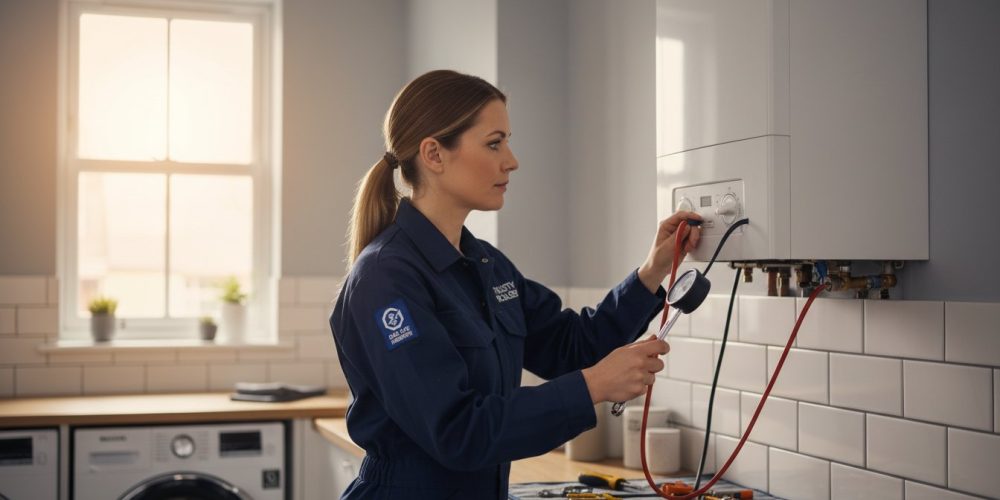
Ignoring a noisy boiler or cold radiators could be the most expensive mistake you make this winter. When sludge builds up, your system works harder, driving up gas bills and risking a total breakdown. Understanding the power flushing central heating pros and cons is the first step toward reclaiming a warm, efficient home. You deserve a heating system that runs quietly and costs less to operate. As your local experts, we are here to ensure that happens safely and professionally.
It’s frustrating to pay for energy that isn’t actually heating your rooms properly. This guide will help you discover if a professional flush is the right investment for your property by breaking down the benefits, risks, and 2026 costs. You will learn about the current price range of £350 to £850 including VAT, the importance of BS 7593:2019 standards, and why a Gas Safe registered engineer is the only person who should handle your system’s health. We’ll also explain how a simple clean can extend the life of your boiler and protect your manufacturer warranty.
Key Takeaways
- Restore system efficiency and lower monthly gas bills by removing restrictive magnetite sludge from your radiators.
- Weigh the power flushing central heating pros and cons to determine if this 4-8 hour deep clean is the right investment for your property.
- Secure your manufacturer warranty and meet BS 7593:2019 standards by ensuring your system is professionally prepared for a new installation.
- Discover the differences between a full power flush and alternatives like Magnecleanse to choose the most cost-effective maintenance path.
- Ensure your home stays protected by using a Gas Safe registered engineer to perform a safe, high-flow system restoration.
What is Power Flushing and Why Does Your Heating System Need It?
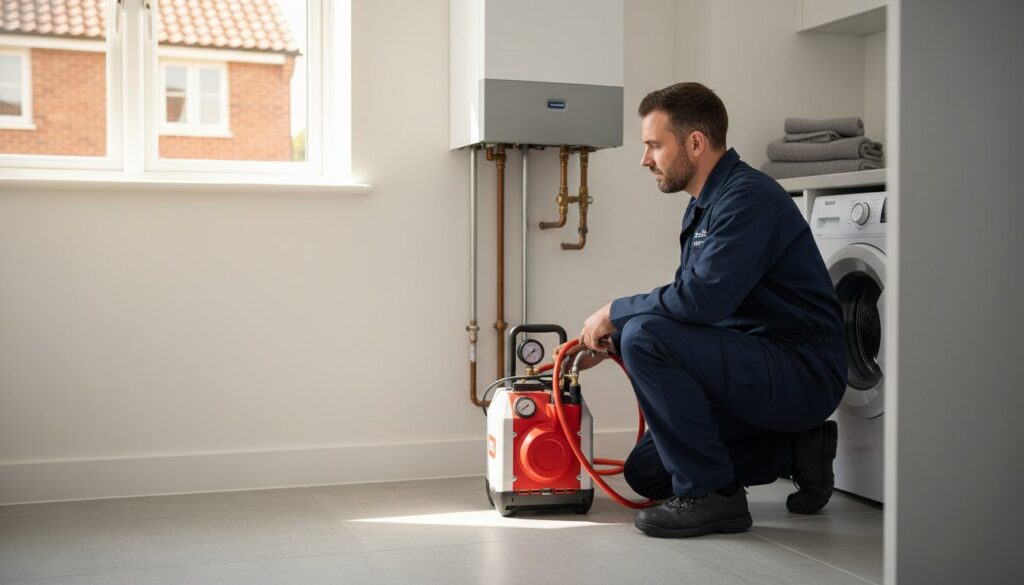
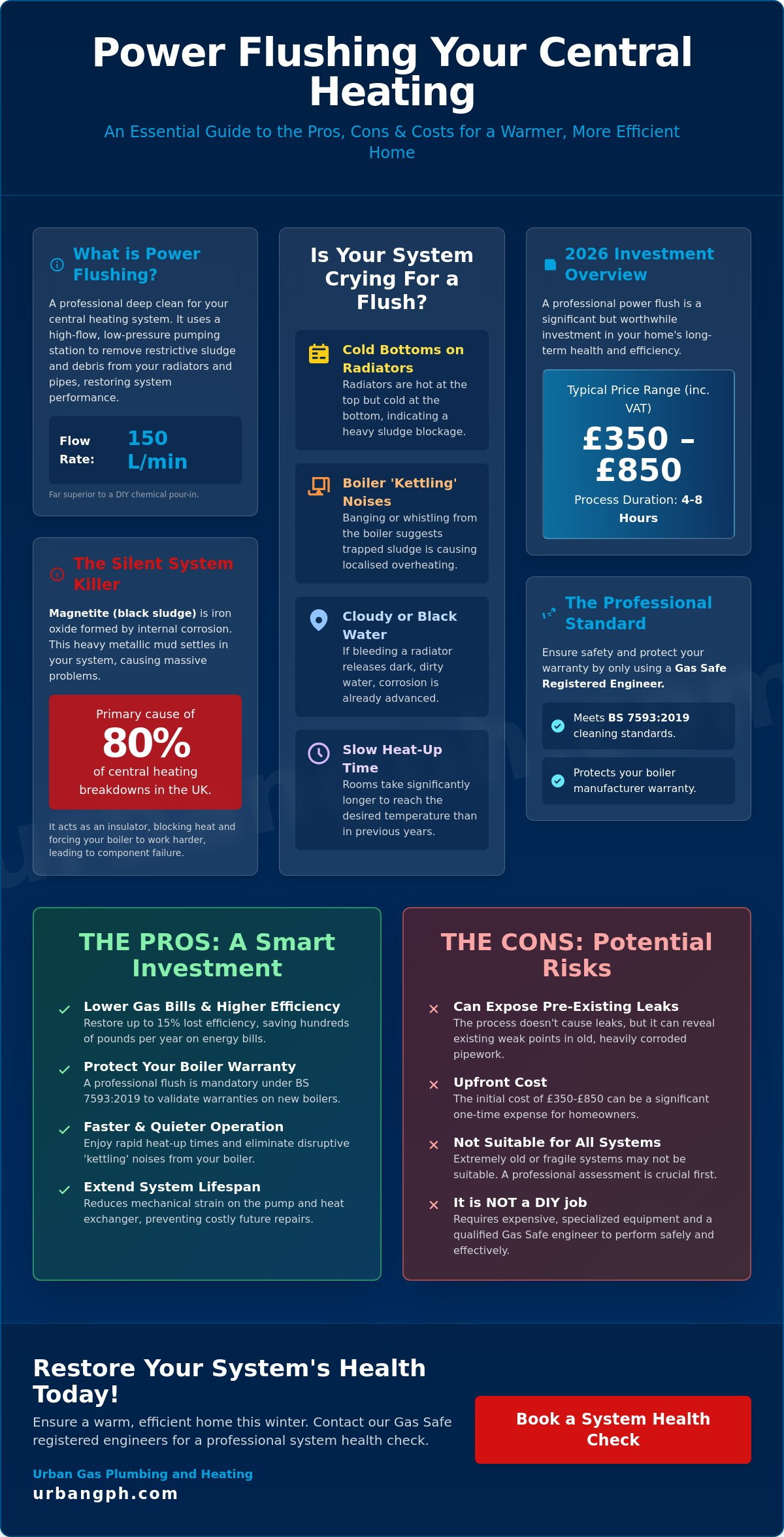
Power flushing is a high-flow, low-pressure deep clean designed to restore your radiators to their original performance. It involves connecting a specialized pumping station to your pipes to circulate water at high velocity. Unlike a standard flush, this method forces out stubborn debris that settles in the corners of your radiators. When homeowners weigh up the power flushing central heating pros and cons, they often find that professional equipment makes the biggest difference. A DIY chemical pour-in simply cannot match the 150 liters per minute flow rate that a dedicated machine provides.
The Science of Sludge: How Magnetite Damages Your Boiler
Magnetite is a black iron oxide that forms when water reacts with the internal steel components of your central heating system. This heavy, metallic mud settles at the bottom of radiators and inside the boiler’s heat exchanger. Because magnetite acts as an insulator, it blocks heat from reaching the room, forcing your boiler to run longer and hotter. Magnetite is the primary cause of 80% of central heating breakdowns in the UK. Over time, this abrasive sludge wears down the internal bearings of your pump and causes the heat exchanger to crack; this leads to expensive emergency repairs.
Symptoms Your System is Crying Out for a Flush
Your system will provide clear warning signs when it’s struggling. You should act quickly if you notice any of the following issues:
- Cold Bottoms: Radiators feel hot at the top but remain stone-cold at the bottom, indicating a heavy sludge blockage.
- Boiler Kettling: Strange banging or whistling noises suggest that sludge is trapped in the heat exchanger, causing localized overheating.
- Cloudy Water: If you bleed your radiators and the water is black or brown, the corrosion process is already advanced.
- Slow Performance: Rooms take significantly longer to reach the desired temperature than they did two years ago.
A professional service isn’t just about water pressure. We use specialized chemicals to break down the debris safely. First, a heavy-duty cleanser loosens the hardened magnetite. After the flush is complete, we add a high-quality inhibitor. This chemical creates a protective film on the inside of your pipes to prevent future rust. This dual approach is why a professional flush is a long-term solution. Understanding the power flushing central heating pros and cons helps you see that while the process takes 4-8 hours, the protection it offers lasts for years.
The Pros: Why Power Flushing is a Smart Investment in 2026
Investing in your heating system today prevents a crisis tomorrow. For most UK homeowners, a power flush is the most effective way to restore a struggling system to its peak performance. When you analyze the power flushing central heating pros and cons, the immediate financial return often tips the scales in favor of taking action. It’s not just about comfort; it’s about protecting your bank account from rising operational costs. A clean system runs shorter cycles and reaches temperature faster, reducing the mechanical strain on every component.
Energy Efficiency and Bill Reduction
A system choked with magnetite can lose up to 15% of its efficiency. In 2026, with energy prices remaining a significant concern for households across the UK, that 15% loss translates to hundreds of pounds wasted every year. By properly maintaining and upgrading your equipment, you ensure that every penny spent on gas actually heats your living space. Modern smart-metered homes benefit significantly from a “rapid heat-up” after a flush. You’ll notice your radiators getting hot within minutes, rather than the sluggish 20-30 minute wait typical of a sludge-filled system.
Protecting Your Boiler Warranty
Boiler manufacturers like Worcester Bosch and Vaillant are increasingly strict about installation conditions. If you install a new boiler on a dirty system without a professional flush, you risk voiding a 10-year warranty on day one. BS 7593:2019 standards now mandate thorough system cleaning to ensure longevity. This is vital if you’re integrating new technology, such as the setups described in The Ultimate Guide to Hot Water Cylinders. A professional certificate of flushing is your insurance policy against future repair costs.
Beyond the financial gains, the physical benefits to your home are immediate. You can expect:
- Silent Operation: No more “kettling” or banging noises from your boiler unit.
- Even Heat: Elimination of cold spots ensures every corner of the room stays warm.
- Pump Longevity: Reduced friction means your circulation pump doesn’t have to work twice as hard.
- Lower Carbon Footprint: Using less gas directly supports a more sustainable home environment.
We see the results of this service every day. A professional flush can add years to an aging boiler’s life and significantly improve the performance of a new one. It’s a proactive step that puts you back in control of your home’s climate. If you’re worried about your system’s performance, book a trusted engineer today for a comprehensive system health check.
The Cons: Potential Risks and System Vulnerabilities
Every maintenance procedure has trade-offs. While the benefits are extensive, a balanced look at power flushing central heating pros and cons requires acknowledging the potential for disruption and technical risks. A professional flush is a significant undertaking that requires 4 to 8 hours of onsite work. This time commitment reflects the thoroughness of the process, but it does mean your heating and hot water will be unavailable for the majority of the day. You should plan for a full day of engineer presence in your home.
The Risk of Leaks in Older Systems
A common concern for homeowners in Portsmouth and Southampton is whether high-velocity water will damage aging radiators. It’s a misconception that the machine “blows holes” in the metal. In reality, a power flush uses high flow rates but maintains low pressure. If a leak appears during the process, it’s usually because the sludge was acting as a temporary plug for a pre-existing corrosion point. When the magnetite is cleared, the underlying weakness is revealed. We don’t cause the leak; we simply expose a failure that was already inevitable.
Our Gas Safe registered engineers perform a rigorous integrity check before starting any work. We look for signs of external rusting and thin spots on radiator panels. If your system is over 25 years old and has never been treated, it might be too fragile for a full power flush. Following a step by step guide for how to effectively powerflush ensures that the process remains safe for most systems, but professional judgment is vital. We will always tell you if your system isn’t a suitable candidate.
Cost vs. Benefit Analysis
The upfront investment is higher than a standard chemical flush. While a basic dose of inhibitor might cost under £100, a professional power flush in 2026 typically ranges from £350 to £850 depending on the number of radiators. You must weigh this against the cost of a new heat exchanger or a complete boiler replacement, which often exceeds £3,000. It’s a choice between a manageable maintenance cost now or a massive emergency bill later.
DIY attempts often lead to higher long-term expenses. Consumer-grade pumps rarely achieve the 150 liters per minute flow rate required to lift heavy sludge. You might spend £150 on rental fees and chemicals only to leave 60% of the debris behind. This wasted effort often results in a secondary call-out when the remaining sludge migrates and blocks your new pump. We provide a fully insured, professional service that gets the job done right the first time. If you’re unsure about your system’s health, book a trusted engineer today for an honest assessment.
Power Flush vs. Alternatives: Which Method is Right for You?
Choosing the right cleaning method requires more than just looking at the price tag. While we’ve discussed the power flushing central heating pros and cons, it’s important to realize that a full power flush isn’t your only option. A standard chemical flush is the most basic alternative. This involves adding a cleaning agent to the header tank and letting the boiler’s internal pump circulate it for several days. This method is often 70% less effective than a professional power flush because it lacks the high-velocity flow needed to lift heavy, settled magnetite. It’s a surface clean, not a deep restoration.
Magnecleanse: The Modern Alternative
Magnecleanse is a magnetic filtration process that sits between a basic chemical flush and a full power flush. It uses a twin-pod magnetic station to capture sludge as water circulates through the system. This method is often preferred for systems in Portsmouth and Southampton that are too fragile for the high-flow pressure of a pumping station. A Magnecleanse typically takes 2 to 3 hours, compared to the 8 hours required for a full power flush. It’s often more cost-effective for systems with moderate buildup, providing a significant efficiency boost without the same level of household disruption.
When a Flush Isn’t Enough
There are times when no amount of cleaning will solve the problem. If a radiator has a “dead spot” that remains cold even after a professional attempt, the sludge has likely hardened into a solid, rock-like block. In these cases, radiator replacement is the only functional solution. Similarly, if your boiler’s heat exchanger is already heavily scaled or leaking, a flush won’t fix the mechanical failure. We often recommend a strategic combination of a system flush and targeted part replacement to ensure the longest possible lifespan for your equipment.
Regardless of the method you choose, you must install a permanent magnetic filter like an Adey MagnaClean. This device sits on your return pipework and continuously pulls out new metallic debris before it can reach your boiler. Installing a filter after a flush can reduce boiler pressure loss by up to 15% and is a requirement for many modern warranties. If you’re unsure which method fits your budget and system age, book a trusted engineer today for a professional system assessment and a clear, fixed-price quote.
Professional Power Flushing: Ensuring a Reliable Result
Execution is everything when it comes to system restoration. While you now understand the power flushing central heating pros and cons, the success of the procedure rests entirely on the skill of the person operating the machine. You must always use a Gas Safe registered engineer for this service. Although the flush itself involves water and chemicals, the process requires disconnecting components and interacting with the boiler’s internal heat exchanger. Only a qualified professional has the legal authority and technical training to ensure your gas appliance remains safe and compliant throughout the visit.
A professional visit is thorough and disciplined. We start by protecting your floors and carpets with heavy-duty sheets before connecting our pumping station. Our engineers then isolate every radiator to focus the full flow rate on one unit at a time. This concentrated approach is the only way to shift stubborn, compacted magnetite. Once the water runs clear, we introduce high-quality inhibitors to provide a long-term chemical shield against future corrosion. We finish every job by testing the system’s pH levels to verify that all cleaning agents have been neutralized.
The Urban Gas Plumbing and Heating Approach to System Health
Reliability is our signature. We don’t believe in guesswork or hidden fees. Our process begins with a transparent pre-assessment check where we use thermal imaging to show you exactly where the blockages are located. This data-driven approach ensures we only recommend a flush if your system truly needs it. As a local hero service in Portsmouth, Southampton, and Chichester, Urban Gas Plumbing and Heating takes pride in our fully insured status and our commitment to punctuality. Upon completion, you will receive a professional certificate for your records. This document is essential for maintaining your manufacturer warranty and can even be a valuable asset if you decide to sell your home.
Manageable Payment Options
We recognize that essential home maintenance often comes at an unexpected time. Most guides ignore the financial pressure of funding major repairs, but Urban Gas Plumbing and Heating believes transparency includes pricing and payment flexibility. You shouldn’t have to choose between a cold home and a drained savings account. By offering retail finance options, we help you secure your heating system’s future without the upfront stress. Professional maintenance pays for itself through lower gas bills and a longer boiler lifespan, and our payment plans make that return on investment accessible today.
Spreading the cost into affordable monthly installments allows you to prioritize your home’s safety and efficiency immediately. Our credit applications are fast and designed to give you a decision quickly so work can begin without delay. You can use our online tools to see how a professional service fits into your monthly budget. Spread the cost of your power flush with our finance calculator and take the first step toward a quieter, warmer, and more reliable home. Book a trusted engineer today and let us handle the pressure for you.
Secure Your Home’s Heating Performance for 2026
A quiet and efficient heating system is within your reach. By understanding the power flushing central heating pros and cons, you can make an informed decision that protects your property and your wallet. You’ve seen how a professional deep clean restores up to 15% of lost efficiency, lowers monthly gas bills, and secures your boiler’s long-term warranty. While older pipes need a professional’s eye to manage potential vulnerabilities, the benefits of a sludge-free system far outweigh the risks of neglect.
Our Gas Safe Registered Engineers provide the expertise you need to keep your home warm. We offer Same-Day Service and transparent finance options to make essential maintenance manageable for every household. You deserve a heating system that works as hard as you do. Don’t let sludge drive up your costs any longer. Take the proactive step toward a more reliable home today.
Book a Fast, Reliable Power Flush Today
We’re ready to restore your comfort and efficiency with professional care.
Frequently Asked Questions
How long does a power flush take to complete?
A professional power flush typically takes between 4 and 8 hours to complete. The exact duration depends on the size of your property and the total number of radiators. For a standard three-bedroom house with 7 to 10 radiators, expect our engineers to be onsite for a full working day to ensure every circuit is thoroughly cleared and tested.
Will power flushing cause my radiators to leak?
Power flushing does not cause leaks; instead, it exposes pre-existing corrosion that was previously hidden by sludge. In older systems, magnetite often acts as a temporary plug for small pinholes. When our high-flow machine removes this debris, these pre-existing holes are revealed. We perform a full integrity check before starting to minimize this risk for your home.
How often should a central heating system be power flushed?
You should have your system flushed every 5 to 6 years to maintain peak efficiency. Regular maintenance prevents the buildup of magnetite that causes 80% of heating breakdowns. If you notice cold spots or boiler noises sooner, don’t wait for the five-year mark. Addressing the power flushing central heating pros and cons early saves you from expensive emergency repair bills later.
Can I power flush my own central heating system?
You cannot effectively power flush your own system because consumer-grade equipment lacks the necessary 150 liters per minute flow rate. Attempting a DIY flush often leaves 60% of the sludge behind. Additionally, any work that requires disconnecting or opening the gas boiler must be performed by a Gas Safe registered engineer to comply with UK safety regulations and insurance requirements.
What is the average cost of power flushing in the UK in 2026?
The average cost of a professional power flush in the UK for 2026 ranges from £350 to £850 including VAT. A small flat with 4 to 6 radiators typically costs between £350 and £450. Larger properties with 15 or more radiators can expect quotes of £700 to £950 or more. These prices reflect the professional equipment and full day of expert labor required for a reliable result.
Do I need a power flush before installing a new boiler?
Yes, you must perform a system flush before installing a new boiler to comply with BS 7593:2019 standards. Most manufacturers, including Worcester Bosch and Vaillant, make a professional flush a condition of their 10-year warranty. Installing a clean boiler on a dirty system can lead to immediate component failure and will often void your protection on day one.
Is a power flush better than a chemical flush?
A power flush is significantly better than a standard chemical flush because it is roughly 70% more effective at removing heavy debris. While a chemical flush relies on the boiler’s own weak pump to circulate cleaner, a power flush uses an external pumping station to force water at high velocity. This is the only way to lift heavy magnetite that has settled at the bottom of your radiators.
What happens if the power flush doesn’t fix my cold radiators?
If a power flush doesn’t fix a cold radiator, the sludge has likely hardened into a solid, rock-like block. In this scenario, the blockage is too dense for water to penetrate, and a full radiator replacement is the only solution. Our engineers will use thermal imaging to identify these “dead” units and provide a transparent quote for the necessary upgrades to restore your heating.