What if the same system that slashes your heating bills this winter could also stop your upstairs bedrooms from hitting 28°C during a July heatwave? Many UK homeowners are currently trapped between the 2024 energy price cap rise to £1,717 and the reality of modern homes that overheat as soon as the sun comes out. You want a home that stays comfortable year-round without the dread of a massive quarterly statement or a complex, noisy installation. Integrating air to air heat pumps into your property offers a direct path to total climate control while significantly reducing your household carbon footprint.
We understand the confusion surrounding shifting government grants and the fear of choosing the wrong technology. This 2026 guide provides the clarity you need to make an informed decision for your property. You’ll discover exactly how these systems perform in British winters, which models offer the lowest decibel ratings for quiet operation, and how to navigate the latest efficiency standards. We provide a straightforward comparison of the top-rated units to ensure your transition to low-carbon living is fast, reliable, and cost-effective.
Key Takeaways
- Understand why air to air heat pumps have become a leading choice for UK home decarbonisation and year-round climate control in 2026.
- Discover how to achieve ultra-efficient heating while solving summer overheating issues with a system that delivers 4kW of heat for every 1kW of electricity.
- Learn how to transition from traditional gas boilers to fan-based heating and why homeowners are choosing this over radiator-based systems.
- Check your eligibility for the 2026 Boiler Upgrade Scheme (BUS) and get clear breakdowns of installation costs for single and multi-room setups.
- Find out why professional F-Gas registration is essential for a safe, high-performance installation from a reliable local hero.
What are Air to Air Heat Pumps and How Do They Work in 2026?
Air to air heat pumps are now a mainstream choice for UK decarbonisation. By 2026, the national shift away from fossil fuels has made these systems a standard for energy-conscious homeowners in Portsmouth and across the South Coast. A system extracts heat from the outside air and transfers it into your home using fan-mounted indoor units. It’s a clean, electric alternative to traditional gas boilers. These units provide high-efficiency warmth in the winter and rapid cooling during the summer months. The Refrigerant Cycle serves as the core mechanism of heat transfer, using a chemical medium to absorb and release energy as it moves between the indoor and outdoor components.
The Mechanism: From Cold Air to Warm Rooms
Your installation consists of an outdoor compressor unit and one or more indoor air handling units. The outdoor unit captures thermal energy from the environment. Even at temperatures as low as -20°C, there’s enough heat in the air for the system to function effectively. You can research the technical details of How Air Source Heat Pumps Work to see the thermodynamics in action. During the summer, the cycle reverses completely. The system acts as a full air conditioning setup by removing heat from your living space and exhausting it outside. We measure performance using two key metrics. The Seasonal Coefficient of Performance (SCOP) tracks heating efficiency, while the Seasonal Energy Efficiency Ratio (SEER) tracks cooling. High-quality air to air heat pumps in 2026 often achieve a SCOP of 4.6 or higher, meaning they produce 4.6kW of heat for every 1kW of electricity consumed.
Air to Air vs. Air to Water: The Fundamental Difference
Understand the difference before you book a professional engineer. Air to air heat pumps heat your home by blowing warm air directly into the room. This is different from air to water systems, which circulate heated water through radiators or underfloor piping. Air to air units respond much faster to temperature changes. They can bring a cold room to a comfortable temperature in under 10 minutes. However, these systems don’t natively heat your domestic hot water. You’ll require a separate unvented cylinder or an electric water heater for your baths and showers. This makes them ideal for modern apartments or well-insulated homes in Southampton and Chichester that prioritise rapid climate control and summer cooling.
- Fast Response: Immediate temperature adjustment compared to wet systems.
- Dual Purpose: Full heating and air conditioning in one unit.
- Easy Install: No need to rip up floorboards for pipes or radiators.
- Efficiency: Drastically lower running costs than old electric heaters.
The Benefits of Choosing Air to Air for Your Home
Air to air heat pumps represent a significant shift in how UK homeowners manage their indoor climate. These systems deliver up to 4 units of heat for every 1 unit of electricity used, achieving a 400% efficiency rating that traditional boilers cannot match. Because these units move heat rather than generating it through combustion, they offer a cleaner, safer alternative for your family. Installation is straightforward and cost-effective. You won’t need to endure the mess of lifting floorboards or installing oversized radiators, as the system relies on small refrigerant pipes and wall-mounted units rather than a complex wet plumbing network.
Beyond temperature control, these systems act as high-performance air purifiers. Built-in filtration systems actively remove dust, pollen, and common allergens from your living spaces. This is a vital benefit for the 20% of the UK population who suffer from hay fever or respiratory issues. You aren’t just heating your home; you’re creating a healthier environment for everyone inside.
Rapid Heating and Cooling Response
Modern, well-insulated UK homes often struggle with temperature regulation. Fan-assisted heating provides an almost instant response, warming a room in minutes. This speed is a major advantage over underfloor heating or traditional radiators which can take hours to reach the desired temperature. During the increasingly hot UK summers, these systems provide essential cooling. They remove excess moisture from the air, solving the “sticky” feeling of humidity that plagues many South Coast homes. Zoning allows you to set different temperatures for different rooms, ensuring you don’t waste energy cooling an empty guest room.
Lower Carbon Footprint and Energy Bills
Replacing an aging G-rated gas boiler with air heat pumps can reduce your household carbon emissions by more than 70%. As we move toward 2026, the integration of smart meters and flexible “time-of-use” tariffs will allow you to run your system when electricity prices are at their lowest. This Department of Energy guide to heat pumps highlights how these systems remain efficient even when outdoor temperatures drop, making them a reliable primary heat source.
By choosing this technology now, you future-proof your property against the inevitable phase-out of fossil fuel heating. It’s a proactive step that protects your home’s value and your wallet. If you want to see how this technology fits your specific layout, book a trusted engineer to walk you through the options. We provide clear, expert advice to help you make the right choice for your property.
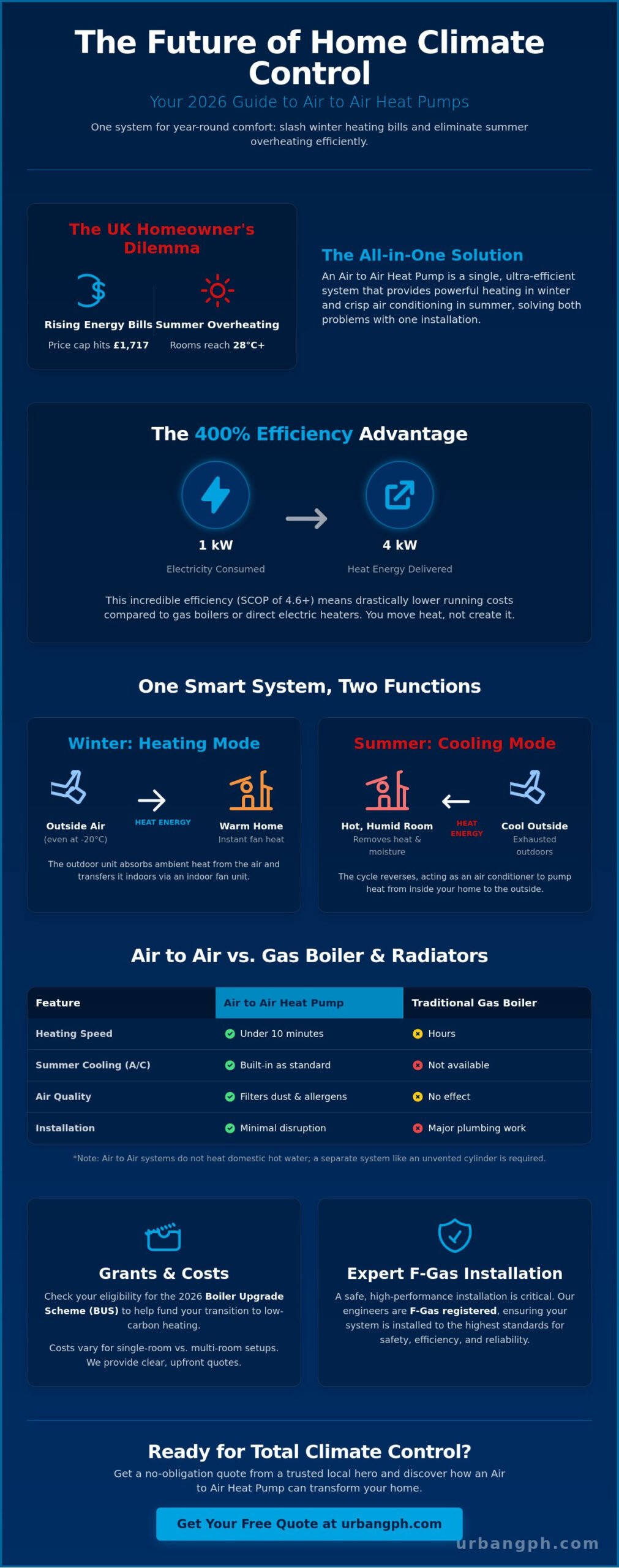
Air to Air Heat Pumps vs. Traditional Heating Systems
Air to air heat pumps represent a fundamental shift from the wet systems UK homeowners have relied on for decades. While a gas boiler burns fuel to heat water for radiators, these systems move heat directly into your living space using fan-coil units. This method is incredibly fast. A standard multi-room installation is usually commissioned and running within 24 to 48 hours, while a full central heating overhaul often takes five days of invasive pipework and flooring disruption.
The most common objection involves the switch from radiant heat to fan-assisted warmth. You won’t have a hot radiator to lean against, but you gain precision climate control in every room. Users quickly adapt to the consistent air temperature and the added benefit of air filtration. Older units were often criticised for being “clunky,” but 2026 technology has changed the game. Modern indoor units operate at sound levels as low as 19dB. This is quieter than a library. For more technical details on the mechanics, consult this U.S. Department of Energy guide to air-source heat pumps to understand how these systems maintain such high output with minimal noise.
Efficiency and Operational Costs
The efficiency gap between gas and electric heat is wider than ever in 2026. While a brand-new A-rated gas boiler might reach 92% efficiency, air to air heat pumps routinely achieve 350% to 400% efficiency. This means for every 1kW of electricity used, you get 4kW of heat. It’s a level of performance that traditional combustion simply can’t match.
- Gas Boiler: 90% efficient; requires annual Gas Safe inspections; prone to pipe sludge.
- Air to Air Heat Pump: 350-400% efficient; no gas safety risks; requires simple filter cleaning.
- Electric Heaters: 100% efficient; the most expensive way to heat a UK home in 2026.
ROI is now faster due to 2026 electricity pricing trends and the removal of the annual boiler service “tax.” You don’t need to worry about carbon monoxide or leaking pipes. Maintenance is straightforward and focuses on airflow rather than combustion safety. Our expert engineers ensure your system stays at peak performance with minimal fuss.
The Aesthetic and Space Impact
Switching to a heat pump lets you reclaim your walls. Removing bulky radiators frees up valuable floor space in smaller UK terrace houses or flats. You have three main options for the indoor hardware depending on your home’s layout:
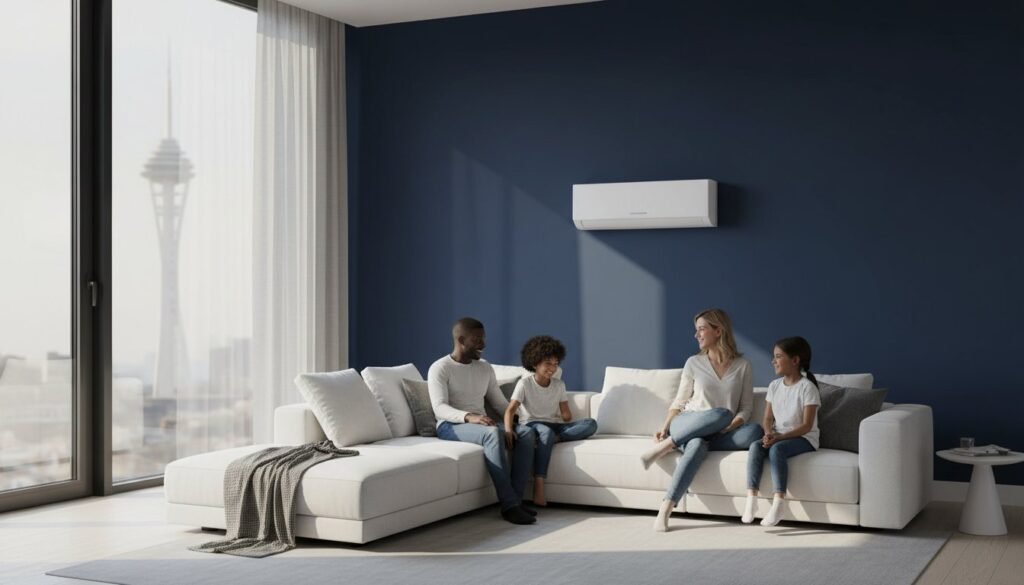
- Wall-mounted units: Slim, high-level units that stay out of the way of furniture.
- Floor-standing units: These mimic the look of a traditional radiator but offer better heat distribution.
- Ducted systems: Completely invisible, with only small grilles visible in the ceiling or floor.
External units require a clear spot for airflow. We find the right spot to ensure the outdoor fan sits on anti-vibration mounts. This prevents noise transfer into your home or the neighbour’s property. It’s a clean, professional setup that modernises your home’s interior and exterior simultaneously. Book a trusted engineer today to see how your floor plan could benefit.
Grants, Costs, and Suitability: Is It Right for You?
Investing in air to air heat pumps requires a clear understanding of the upfront investment and long-term savings. Installation costs depend on the size of your property and the number of rooms you want to heat. A single-room split system typically costs between £1,500 and £3,500. If you need a multi-split system to cover an entire three-bedroom home, prices generally range from £5,000 to £9,000. These figures include both the high-quality hardware and the professional labour required for a safe setup.
Property layout is the biggest factor for suitability. These systems are the perfect candidates for:
- Modern Flats: Smaller footprints allow air to circulate efficiently.
- Open-Plan Homes: Large, connected spaces benefit most from consistent airflow.
- Home Offices: Ideal for maintaining a precise temperature in converted outbuildings.
You must use an MCS Certified installer to guarantee your system meets UK safety regulations. This certification is also a mandatory requirement for accessing any government financial support. Choosing a certified professional ensures your warranty remains valid and your system operates at peak efficiency from day one.
Solving the Hot Water Puzzle
Air to air heat pumps don’t provide hot water for your taps or showers. You need a separate solution for your domestic hot water needs. We recommend integrating an unvented hot water cylinder with an immersion heater or a dedicated heat pump water heater. Many homeowners opt for a hybrid approach. They keep their existing boiler to handle the water while using the heat pump for space heating. This setup offers a reliable way to lower carbon emissions without sacrificing high-pressure showers.
The Boiler Upgrade Scheme in 2026
The 2026 Boiler Upgrade Scheme (BUS) update has streamlined the path to renewable energy. Eligible homeowners can access grants of £7,500 to offset installation costs. Your installer will apply for the grant on your behalf, reducing the amount you pay upfront. To qualify, your home must have a valid Energy Performance Certificate (EPC) with no outstanding recommendations for loft or cavity wall insulation. The current scheme is set to run until March 2028, but funding is allocated on a first-come, first-served basis. Act quickly to secure your voucher before the annual budget is reached.
Ready to upgrade your home heating? Contact our expert team for a reliable installation quote today.
Expert Installation: Why Urban Gas Plumbing and Heating?
Choosing the right team to install air to air heat pumps is a decision that impacts your home comfort for the next 15 years. At Urban Gas Plumbing and Heating, we live by our “Reliable Local Hero” promise. This means you get a fast, professional, and fully insured service every time. We don’t just hang units on walls; we engineer systems that work for the specific climate of the UK South Coast. Our engineers are active across Portsmouth, Southampton, and Chichester, bringing local expertise to every street. Every installer on our team is F-Gas registered. This isn’t optional. It’s a legal necessity for handling the refrigerants found in modern heat pumps. We provide an end-to-end service that starts with precision heat loss calculations and ends with a fully commissioned system. We’re here for the long term. Our annual servicing ensures your system stays efficient and your manufacturer warranty remains valid through 2026 and beyond.
Our Professional Installation Process
We’ve refined our process to be as non-intrusive as possible. We treat your home with the respect it deserves, ensuring the transition to renewable energy is seamless.
- Step 1: Detailed home survey and capacity planning. We don’t guess. We measure. Our team conducts a thorough assessment of your home’s thermal envelope to ensure your new system is perfectly sized for your specific room dimensions.
- Step 2: Clean, efficient installation. We work quickly to minimize disruption. Our engineers use protective floor coverings and dust-management systems to protect your decor. Most standard installations are completed within a single working day.
- Step 3: User handover. We won’t leave until you’re confident. We’ll walk you through your new “Smart” climate control features, showing you how to set schedules and maximize your energy savings via your smartphone.
Trust and Compliance
Our Gas Safe roots mean we understand the complexities of home heating better than most. We apply that same level of technical rigor to every air to air heat pumps project we undertake. We believe in transparent pricing. You’ll receive a clear, fixed quote with no hidden costs or surprise fees at the end of the job. We also provide a “Same-Day” response for maintenance and repairs because we know a heating issue is always an emergency. We’re proud of our reputation for punctuality and technical excellence in the local community. Don’t settle for less when it comes to your home’s energy future. Book your renewable energy consultation today and speak with a trusted local expert who puts your safety first.
Secure Your Home’s Energy Future Today
Switching to air to air heat pumps represents a smart move for UK homeowners looking to balance year-round comfort with carbon reduction in 2026. These systems provide rapid heating and essential summer cooling while lowering energy bills compared to aging electric radiators. You don’t have to navigate the transition to renewable energy alone. Our team brings decades of combined experience in both traditional gas boilers and modern heat pump technology to every project across the South Coast.
Reliability is our priority. Urban Gas Plumbing and Heating employs F-Gas Registered and Gas Safe Certified engineers who understand the technical demands of high-efficiency installations. We remove the guesswork with transparent, fixed-fee maintenance plans that protect your investment for years to come. Whether you’re in Portsmouth, Southampton, or Chichester, we provide the fast, professional service your home deserves. Take control of your indoor climate with a system designed for the modern world. Your journey to a more efficient, comfortable home starts with a single expert consultation.
Get a Professional Quote for Your Air to Air Heat Pump Installation
Frequently Asked Questions
Do air to air heat pumps work in the UK winter?
Yes, modern air to air heat pumps operate efficiently in temperatures as low as -15°C. Most UK winter nights rarely drop below -5°C, so these systems maintain a high Coefficient of Performance even in January. You’ll get reliable heating throughout the coldest months in Portsmouth or Southampton. Our expert engineers ensure your unit is sized correctly to handle peak winter loads without losing any efficiency.
Can I get a grant for an air to air heat pump in 2026?
Currently, air to air heat pumps don’t qualify for the £7,500 Boiler Upgrade Scheme grant. However, you still benefit from 0% VAT on installations until 31 March 2027 under current UK government tax incentives. This saving reduces your upfront investment by 20% compared to standard home improvements. We provide transparent quotes to help you maximize these tax-saving benefits today.
Are air to air heat pumps noisy for neighbours?
No, high quality air to air heat pumps produce between 40 and 50 decibels during standard operation. This is roughly the volume of a quiet library or a modern refrigerator. To comply with Permitted Development rights, we install units that meet strict noise limit requirements. This ensures your system won’t disturb your neighbours in densely populated areas like Chichester or Bournemouth.
How much does it cost to run an air to air heat pump per hour?
Based on current UK energy price caps of 24.5p per kWh, a standard unit costs approximately 12p to 25p per hour to run. Efficiency depends on the outdoor temperature and your desired indoor settings. Because these systems deliver 3kW of heat for every 1kW of electricity used, they remain a cost-effective alternative to electric plug-in heaters. Book a professional assessment to get an accurate consumption estimate.
Can an air to air heat pump replace my gas boiler entirely?
Yes, you can replace your gas boiler for space heating, but you’ll need an alternative solution for hot water. Air to air heat pumps provide rapid, efficient heating for every room in your home. Many homeowners in the South Coast use them to move away from gas entirely. You’ll simply need to pair the system with an unvented cylinder or electric water heater to manage your taps and showers.
Do I need planning permission for a heat pump unit?
Most installations fall under Permitted Development and don’t require formal planning permission. Your unit must be at least 1 metre from the property boundary and shouldn’t exceed 0.6 cubic metres in volume. If you live in a conservation area or a listed building, specific rules apply. Our fully insured team handles these checks to ensure your installation complies with all local building regulations.
How often do air to air heat pumps need servicing?
You should book a professional service for your air to air heat pump once every 12 months. Regular maintenance keeps your manufacturer warranty valid and ensures the system operates at peak efficiency. Our expert engineers clean filters, check refrigerant levels, and inspect electrical connections. This prevents unexpected breakdowns and extends the lifespan of your equipment to 15 years or more.
Can air to air heat pumps provide hot water?
No, air to air heat pumps are designed specifically for space heating and cooling. They circulate warm or cool air through indoor fan units rather than heating water for radiators or taps. If you require a system for hot water, you might consider an air to water system or an independent hot water cylinder. Our trusted team can help you design the perfect hybrid setup for your home.