What if skipping a single £100 appointment could cost you £3,000 in emergency repair bills and instantly void your entire manufacturer warranty? It’s a common worry for homeowners in 2026, especially when you’re already juggling rising energy costs and the fear of carbon monoxide leaks. You might be wondering exactly how often should you service a boiler to stay compliant without wasting money on unnecessary maintenance. We understand that the small print can be confusing and a sudden breakdown is the last thing your budget needs right now.
In this guide, you’ll discover the essential servicing frequency required to protect your home and your wallet. We’ll show you how regular checks by a Gas Safe Registered engineer can lower your monthly energy bills and extend your boiler’s lifespan significantly. We’re going to break down the latest 2026 safety standards, warranty requirements, and the specific cost benefits of booking your service before the winter rush begins. It’s time to trade that maintenance anxiety for the peace of mind that comes with a safe, efficient home.
Key Takeaways
- Stick to the 12-month industry standard to safeguard your manufacturer warranty and prevent unexpected repair costs.
- Discover exactly how often should you service a boiler to maintain peak energy efficiency and keep your monthly bills under control.
- Learn to spot dangerous red flags like yellow pilot lights or banging noises before they turn into a total heating emergency.
- Understand the legal obligations for landlords, including the mandatory annual Gas Safety Certificate (CP12) for every property.
- Find out what happens during a professional Gas Safe inspection, from internal burner cleaning to vital safety device testing.
The Golden Rule: Why 12 Months is the Industry Standard in 2026
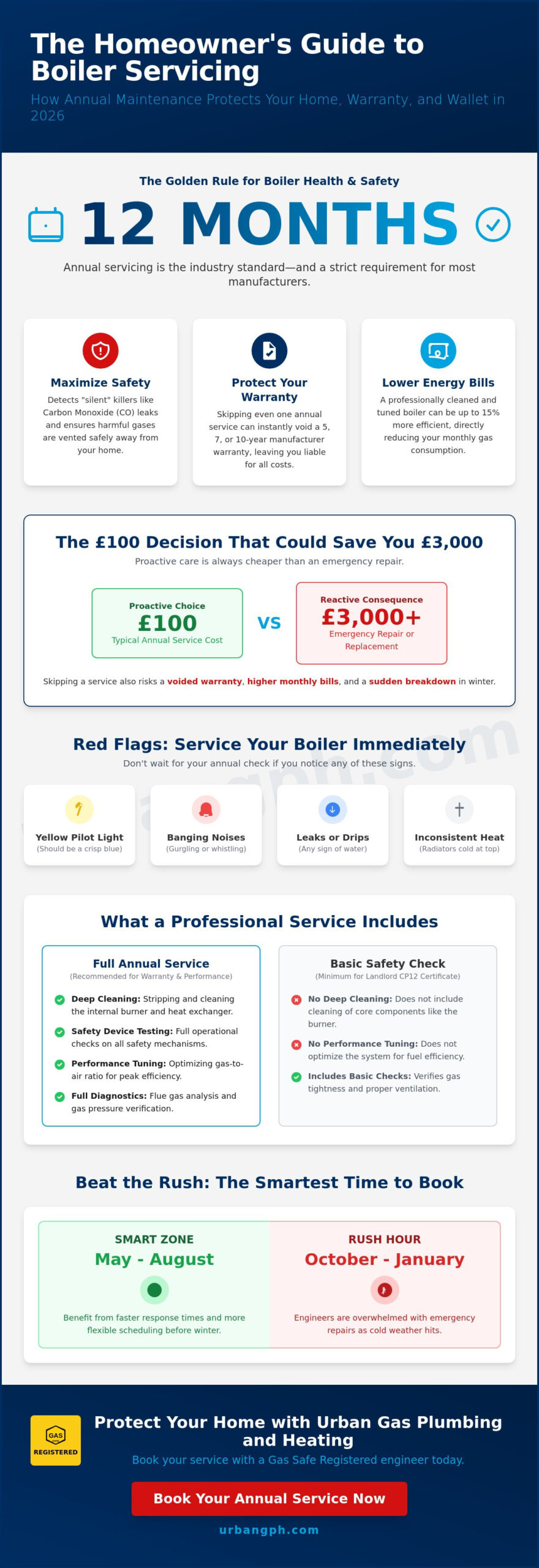
For most UK homeowners, the question of how often should you service a boiler has a very specific answer: once every 12 months. This isn’t just a helpful suggestion or a best-practice guideline. It is a strict industry standard designed to keep your home safe and your finances protected. Most modern manufacturers require an annual service to keep your 5, 7, or 10-year warranty valid. If you skip a single year, you risk voiding that protection instantly. This could leave you responsible for a £3,000 replacement bill if a major component fails. Don’t let a simple maintenance task turn into a financial disaster.
Safety remains the most urgent reason for this 12-month schedule. Annual checks are the only reliable way to detect “silent” carbon monoxide leaks. These leaks are impossible for humans to see, taste, or smell. Our Gas Safe Registered engineers use precision tools to measure gas pressure and flue emissions. This ensures your system is venting dangerous gases correctly. Beyond safety, there is a clear impact on your wallet. A neglected unit builds up debris that forces the system to work harder. Regular cleaning ensures your system remains up to 15% more efficient than a neglected one. This efficiency translates directly into lower monthly energy bills. To understand the internal components we inspect, it helps to know what is a boiler and how its heat exchanger functions within your central heating system.
The Difference Between a Service and a Safety Check
Many people confuse a basic safety check with a full professional service. A safety check is a high-level inspection that focuses on gas tightness and ventilation. It’s often the minimum requirement for a Landlord Gas Safety Certificate. However, a full service is much more thorough. We strip down the unit to clean the burner and heat exchanger. We also test all safety devices and optimize the gas-to-air ratio. You need this deeper level of care to ensure the long-term health of your system and to satisfy your warranty terms. How often should you service a boiler for peak performance? The answer is always annually, regardless of how new the system is.
Best Time of Year to Book Your Service
Don’t wait until the first frost in October to book your appointment. The smartest time to schedule maintenance is during the summer months between May and August. You will benefit from faster response times and more flexible scheduling. Engineers are often overwhelmed with emergency repairs when the heating goes on for the first time in autumn. By being proactive, you avoid the seasonal rush and ensure your home is prepared for winter. Booking early gives you total peace of mind before the temperature drops.
The Financial and Legal Risks of Skipping Your Boiler Service
Skipping a service isn’t just a gamble with your comfort; it’s a high-stakes financial risk. If you are questioning how often should you service a boiler, consider the immediate impact on your manufacturer guarantee. A single missed year can void a 10-year warranty. This leaves you vulnerable to the full cost of a replacement, which can easily exceed £3,000. It’s a heavy price to pay for missing a standard £100 appointment. Most homeowners don’t realize that the warranty is a contract. If you don’t uphold your end by booking an annual check, the manufacturer isn’t obligated to help when a major component fails.
Beyond the warranty, there is the hidden drain on your bank account through monthly energy bills. In modern conventional heating systems, even a thin layer of carbon buildup on the heat exchanger forces the unit to burn more gas to reach the same temperature. This inefficiency creeps up slowly. You won’t notice the change overnight, but you will notice the higher gas consumption in your winter statements. Regular maintenance keeps these components clean and running at their laboratory-tested efficiency levels. It’s the most effective way to keep your running costs as low as possible.
Small issues rarely stay small. A worn seal or a slightly blocked pressure relief valve might seem minor, but these are the primary causes of catastrophic internal floods. When an engineer visits, they identify these “early warning” signs before they lead to emergency call-outs. If you want to avoid a middle-of-the-night crisis, you can book a professional inspection to secure your system’s integrity. Proactive care is always cheaper than an emergency repair bill.
Warranty Small Print: What You Need to Know
Modern boilers in 2026 often use digital logging to track their own maintenance history. This means manufacturers can see exactly when the last service occurred. To keep your cover active, every entry must be signed off by a Gas Safe Registered engineer. DIY checks or “handyman” inspections don’t count and will be rejected during a claim. Always ensure your service record is updated and kept in a safe place.
Landlord Compliance and Tenant Safety
For landlords, the stakes are even higher. The Gas Safety (Installation and Use) Regulations make annual servicing a legal requirement. You must provide tenants with a Landlord Gas Safety Certificate (CP12) every 12 months. Failing to do so can result in heavy fines, invalidated property insurance, or even legal action. Combining your service with your CP12 is the most efficient way to ensure tenant safety while protecting your investment. Knowing how often should you service a boiler is vital for staying on the right side of the law.
Red Flags: When to Service Your Boiler Before the 12-Month Mark
Wait, is that noise normal? Many homeowners ignore small sounds until the heating stops working entirely. While the standard advice for how often should you service a boiler is once every 12 months, these red flags require an urgent response. Proactive maintenance at the first sign of trouble prevents minor issues from spiraling into expensive emergency repairs. If your system is acting up, don’t wait for your scheduled anniversary to call in a professional.
Physical indicators on the boiler casing are particularly concerning. If you see soot marks, dark stains, or yellowing around the edges of the unit, stop using it immediately. These are often signs of incomplete combustion. Similarly, check your pilot light regularly. A healthy flame should be a crisp, steady blue. If it appears yellow or orange, it’s a danger sign that the burner is not functioning correctly. These visual cues are your boiler’s way of telling you that its internal safety systems are compromised and need immediate attention.
Unusual sounds are another clear indicator of internal distress. A loud banging or whistling, known in the trade as “kettling,” usually points to a buildup of limescale or sludge within the heat exchanger. Gurgling noises might just be air in the radiators, but they can also signal a failing pump. If your gas bills are rising without a clear reason, your boiler’s efficiency has likely dropped. This forces the unit to run longer and harder to maintain the same temperature. It’s a clear sign that the internal components need a professional clean to restore performance.
Diagnostic Warning Signs for Homeowners
Pressure drops are a common headache that shouldn’t be ignored. If you find yourself topping up the pressure gauge every few days, you likely have a hidden leak or a failing expansion vessel. You might also notice radiators taking an age to get warm or hot water that cuts out mid-shower. These performance dips often point to a struggling diverter valve or a pump nearing the end of its life. A quick professional check can often save the component before it fails completely.
The Danger of Carbon Monoxide
Carbon monoxide is the most serious threat because it’s invisible and odorless. While an annual service is your primary defense, you must have audible CO alarms installed on every floor as a secondary fail-safe. If your alarm sounds or you suspect a leak, turn off your gas supply at the meter, open all windows, and leave the property. Call a Gas Safe Registered engineer from a safe location immediately. Safety is our absolute priority. We’re here to ensure your home remains a secure environment for your family.
What Does a Professional Gas Safe Boiler Service Actually Include?
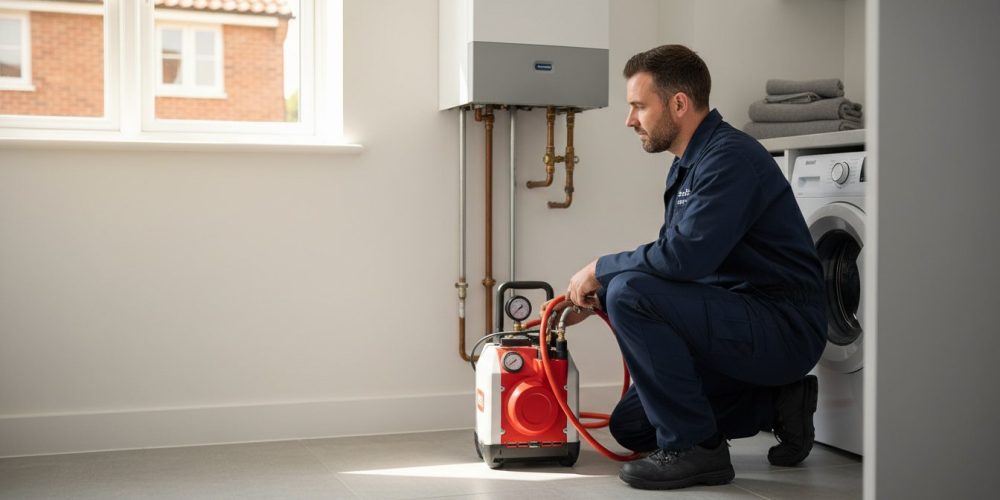
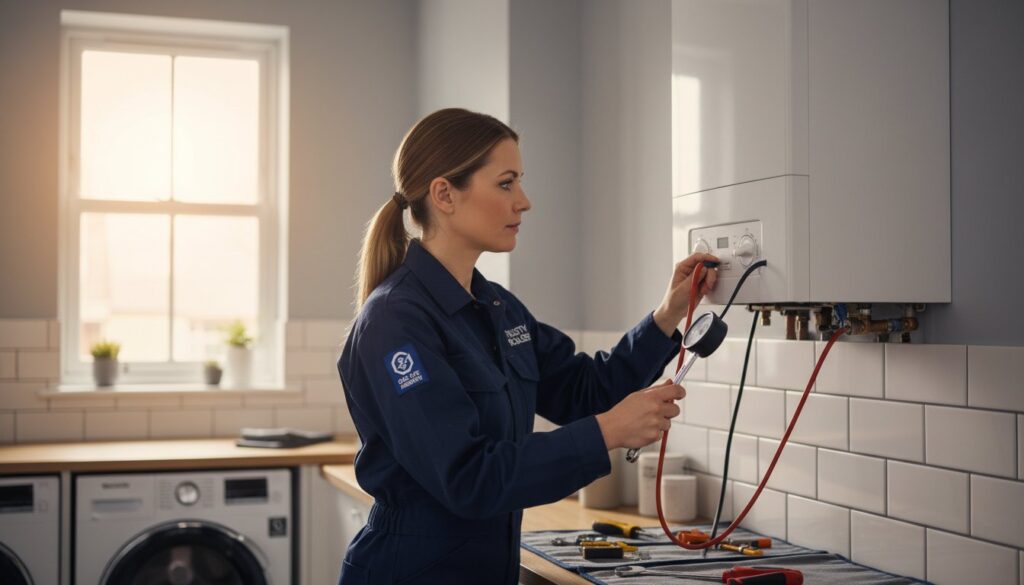
A professional service is far more than a quick visual check. It’s an intensive technical audit of your entire heating system. While you now know how often should you service a boiler to keep your warranty, understanding what happens during those 40 to 60 minutes helps you see the value in the investment. We don’t just look at the unit; we strip it down. Our engineers perform a rigorous visual inspection for signs of corrosion, water leaks, or incorrect installation. We then move to the internal components, focusing on cleaning the burner and the primary heat exchanger. This removal of debris is what prevents the “kettling” noises mentioned earlier and keeps your system running at peak performance.
Flue gas analysis is perhaps the most critical technical step. We use a specialized electronic analyzer to measure the ratio of gas to air. This ensures optimal combustion. If the ratio is off, your boiler is either wasting fuel or producing dangerous levels of carbon monoxide. We also test all internal safety devices, such as the flame failure protection and shut-off valves. These components must work perfectly to protect your family in the event of a system fault. If you want to ensure your home is fully protected, book your expert boiler service today with our Gas Safe registered team.
The Technical Deep Dive
We go beyond the boiler casing to check gas pressure and flow. This confirms your unit isn’t “over-firing” or “under-firing,” both of which cause premature component failure. We also inspect the expansion vessel and all hot water cylinder connections to ensure the entire pressurized system is stable. Seal integrity is another priority. Heat-resistant seals prevent toxic fumes from entering your living space. We replace any that show signs of hardening or cracking. How often should you service a boiler to catch these issues? An annual check is the only way to identify these microscopic points of failure before they become leaks.
The Service Report and Documentation
Once the work is done, you’ll receive a comprehensive Gas Safe service record. This document is your proof of maintenance. It includes the results of your flue gas analysis and a checklist of every component tested. Keep this paperwork in a safe place. You’ll need it to validate any future warranty claims. It’s also a vital part of the “Home Information Pack” when you decide to sell your property. Buyers in 2026 are savvy; they want to see a consistent history of professional care before they commit to a purchase.
Protecting Your Home with Urban Gas Plumbing and Heating
Urban Gas Plumbing and Heating is your dedicated partner for home safety and technical excellence. We understand the stress of a sudden breakdown, which is why our Gas Safe Registered engineers prioritize speed and reliability. When you’re considering how often should you service a boiler, remember that consistency is the key to preventing a mid-winter crisis. We provide clear, transparent reports after every visit. You won’t find hidden fees or confusing jargon here. We offer honest trade expertise from a local team that cares about your family’s safety and your home’s warmth.
Our capabilities extend across your entire heating system. We are experts in boiler installation, boiler repair, and the servicing of modern Air Source Heat Pumps. If your system feels sluggish, we can perform a professional power flushing to restore circulation. We also handle radiator replacement and hot water cylinder maintenance with the same level of discipline. From Landlord Gas Safety Certificates to emergency plumbing, we act as the steady hand you need when things go wrong. We take immense pride in our local roots across the South Coast, serving communities with a no-nonsense approach to home energy.
Why Choose Urban Gas for Your Annual Service?
We are the reliable local heroes for homeowners in Portsmouth, Southampton, and Chichester. Our Same-Day Service promise means we work decisively to restore your comfort. We prefer to help you before an emergency happens. Our proactive maintenance approach allows us to spot tiny leaks or worn seals during your annual check. This prevents the need for a costly boiler repair later in the season. If you are still unsure how often should you service a boiler, our team can set up recurring reminders so you never miss a deadline. We are your partner in lowering your carbon footprint and keeping your energy bills manageable.
Financing Your Home Improvements
Sometimes a routine service reveals that a replacement is the most cost-effective path forward for an aging system. We provide accessible retail finance solutions to help you manage these essential home improvements. You can spread the cost of a new boiler installation through manageable monthly installments. Our credit application process is designed to be transparent and helpful. We provide total clarity on all payment options and interest rates from the start. This allows you to invest in a high-efficiency system without straining your immediate budget. Book a trusted engineer today for total peace of mind and a safer, warmer home.
Secure Your Home’s Warmth and Efficiency for 2026
Maintaining your heating system shouldn’t be a source of stress. You now know that the industry standard for how often should you service a boiler is once every 12 months. This simple annual appointment is your strongest defense against voided warranties, high energy bills, and dangerous carbon monoxide leaks. By addressing minor issues today, you prevent the catastrophic breakdowns that always seem to happen on the coldest nights of the year.
Our team of Gas Safe Registered Engineers is ready to help you maintain a safe and efficient home. We provide a fully insured professional service backed by transparent, helpful advice and local expertise. We treat every home with the discipline and care it deserves. Don’t wait for the temperature to drop before checking your system’s health. Proactive care is the only way to ensure your family stays warm and your manufacturer guarantee remains valid.
Take control of your home’s performance now. Book your professional Gas Safe boiler service with Urban Gas today and enjoy the peace of mind that comes with expert care. Your boiler is the heart of your home. Let’s keep it beating strong for years to come.
Frequently Asked Questions
Is a boiler service mandatory for homeowners?
No, a boiler service isn’t a legal requirement for private homeowners, but it is a critical safety and financial obligation. While you won’t face a fine, skipping an annual check will instantly void your manufacturer warranty. This leaves you liable for the full cost of any future repairs. For landlords, an annual Gas Safety check is a legal requirement under UK law.
How long does a standard boiler service take?
A professional service typically takes between 40 minutes and one hour to complete. Depending on the age and condition of your system, the process can range from 30 minutes to two hours. Our Gas Safe Registered engineers work efficiently to minimize disruption to your day while ensuring every internal component is thoroughly cleaned and tested for safety.
Can I service my own boiler to save money?
No, you cannot legally or safely service your own gas boiler. By law, any work on a gas appliance must be carried out by a Gas Safe Registered engineer. DIY attempts are extremely dangerous and can lead to gas leaks or carbon monoxide poisoning. Additionally, a self-serviced boiler will not be recognized by manufacturers, which automatically voids your warranty protection.
Does a new boiler need a service in the first year?
Yes, a new boiler requires its first service exactly 12 months after the installation date. Many homeowners believe a new unit is maintenance-free, but manufacturers require this first-year check to keep the warranty active. If you are wondering how often should you service a boiler to protect a new investment, the answer is every single year from the date of install.
What happens if I miss my boiler service date?
Missing your service date usually results in the immediate loss of your manufacturer guarantee. Beyond the financial risk, a missed service means that potential safety issues like worn seals or flue blockages go undetected. Your system’s efficiency will also begin to drop as debris builds up, leading to a steady increase in your monthly energy consumption and higher gas bills.
Is a boiler service the same as a Gas Safety Certificate?
No, these are two different procedures. A Landlord Gas Safety Certificate (CP12) is a legal check that focuses on the safety of gas appliances and flues. A boiler service is a comprehensive maintenance procedure that includes internal cleaning and component optimization. For the best results, we recommend combining both to ensure your system is both legally compliant and running at peak efficiency.
How much should I expect to pay for a professional service in 2026?
In 2026, the average cost for a standard gas boiler service in the UK is approximately £100. Most homeowners can expect to pay between £80 and £120 for a one-off visit. Because we operate across the South East, prices in areas like Portsmouth and Southampton typically range from £90 to £130. We provide transparent pricing with no hidden fees for every visit.
Can a boiler service lower my monthly gas bills?
Yes, regular maintenance can significantly reduce your monthly gas consumption. When an engineer cleans the burner and heat exchanger, the boiler doesn’t have to work as hard to heat your home. This can improve efficiency by up to 15% compared to a neglected unit. If you want to know how often should you service a boiler for maximum savings, an annual appointment is the most effective schedule.