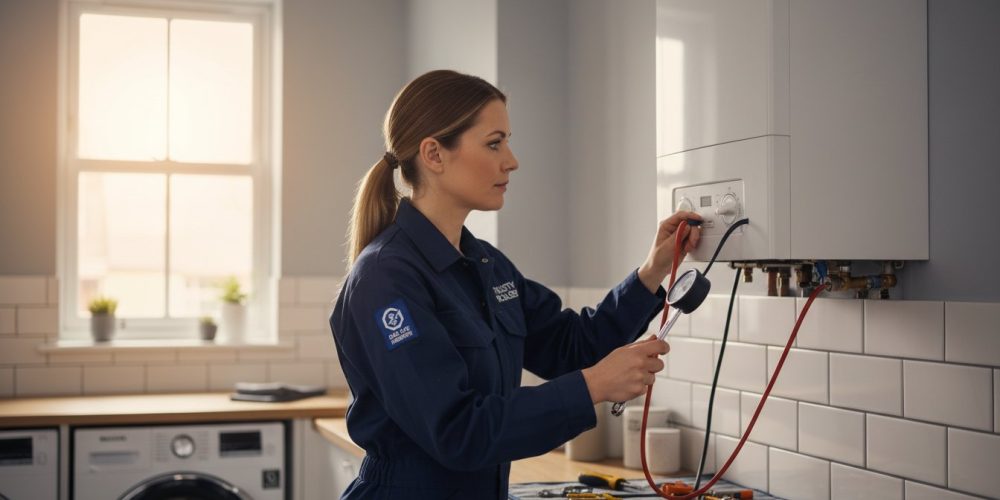
It is 6:00 PM on a freezing Tuesday in January when your radiators go cold and the hot water stops running. This is the exact moment the panic sets in. You aren’t just facing a cold night. You’re worrying about potential gas leaks and the sudden impact of an unplanned repair bill on your monthly budget. We understand that an emergency boiler breakdown is one of the most stressful events a homeowner can face. You need a solution that is fast, safe, and affordable.
We agree that nobody should have to choose between their safety and their savings. This guide provides the clear, actionable steps you need to take right now to secure your home and your peace of mind. You’ll learn exactly how to secure a Gas Safe Registered engineer today and how retail finance options turn an unexpected crisis into manageable monthly payments. We’ll preview the essential safety checks you must perform and show you how Same-Day Service restores your heating with total price transparency and expert diagnosis. Our goal is to get your home warm again without the financial strain.
Key Takeaways
- Prioritise your home’s safety by following our immediate checklist for identifying gas leaks or carbon monoxide risks during a sudden breakdown.
- Learn to distinguish between minor component failures and terminal faults to decide whether a repair or a full replacement is the most cost-effective path.
- Manage unexpected costs with ease by exploring how retail finance can turn an emergency boiler replacement into affordable monthly instalments.
- Ensure total peace of mind by knowing exactly what to verify when hiring a Gas Safe registered engineer for a professional system diagnostic.
- Discover proactive maintenance strategies and smart technology upgrades that prevent future failures and keep your manufacturer warranty valid.
Immediate Steps for an Emergency Boiler Breakdown
A sudden loss of heating and hot water creates immediate stress, especially during the colder months in the UK. Before you call for an emergency boiler repair, you must secure your property and rule out simple external failures. Safety is your absolute priority. If you suspect a gas leak or carbon monoxide presence, act without delay. Professional help is essential, but these first few minutes determine the safety and speed of the resolution.
The Emergency Safety Protocol
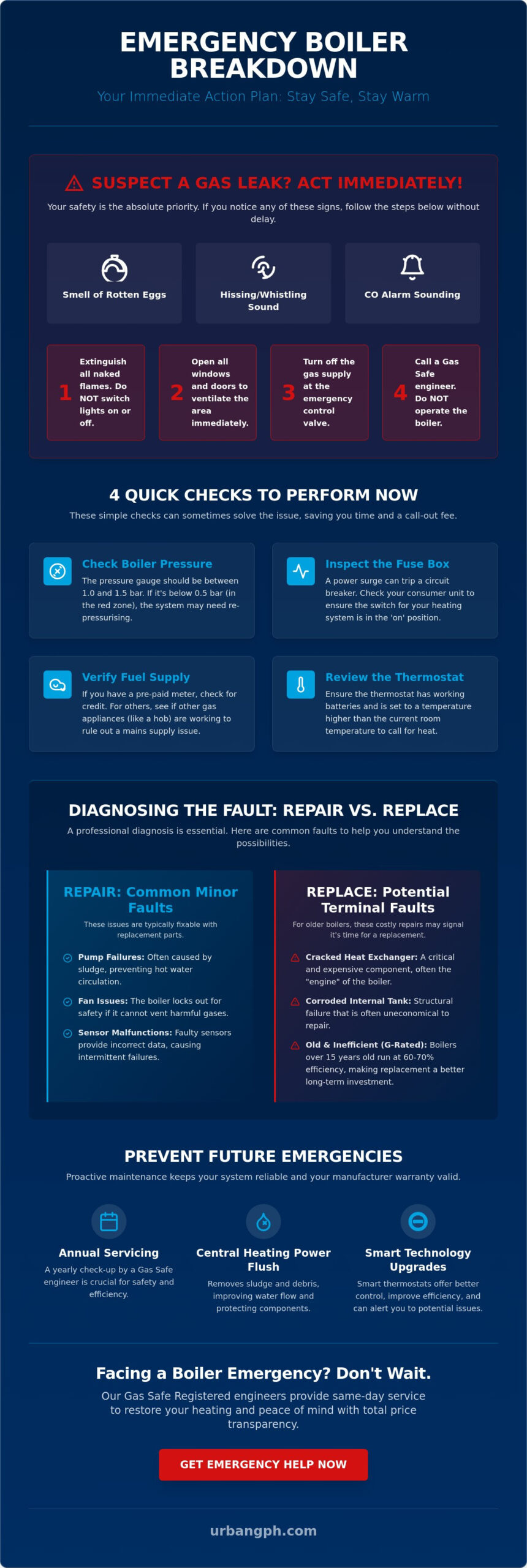
Signs of a gas emergency include the smell of rotten eggs, a whistling sound near your gas meter, or a sounding carbon monoxide alarm. If you detect any of these indicators, extinguish all naked flames and open every window to ventilate the property immediately. Locate your gas emergency control valve, usually found next to your meter, and turn the handle 90 degrees to the “off” position. You must never attempt to open the boiler casing yourself. Only a Gas Safe Registered engineer is legally qualified to access the internal components of an emergency boiler system, as tampering can lead to fatal gas leaks or explosions.
Quick Checks to Perform Now
Before booking a call-out, perform these functional checks to see if the issue is a simple system hiccup rather than a mechanical failure. Understanding what is a boiler and how it interacts with your home infrastructure helps you identify these external factors. Over 85% of modern condensing units enter a “lockout” state for safety if they detect a minor fault, which often displays as a specific alphanumeric code on the digital screen.
- Check the Pressure Gauge: Your boiler pressure should sit between 1.0 and 1.5 bar. If the needle is below 0.5 bar, the system won’t fire.
- Inspect the Fuse Box: Look for a tripped circuit breaker in your consumer unit. A power surge can easily knock out the electrical supply to your heating system.
- Verify Fuel Supply: If you use a prepaid meter, ensure you have sufficient credit. For gas customers, check if other gas appliances like your hob are still functioning.
- Review the Thermostat: Ensure the batteries aren’t dead and the target temperature is set higher than the current room temperature.
Locating your internal stopcock is also vital. If your breakdown involves a leak or a burst pipe, turning off the main water supply prevents what can quickly become over £2,000 in structural water damage. Most stopcocks are located under the kitchen sink or in a hallway cupboard. Knowing these locations saves precious time when an engineer arrives to conduct a fast, reliable repair. We understand the urgency of a cold home, so gathering this information now ensures we can provide the same-day service you need to get your system back online.
Diagnosing Critical Boiler Faults: Repair vs. Replacement
A sudden boiler failure creates immediate stress. Your first priority is determining whether the unit requires a quick part swap or a full system replacement. Minor issues, such as a seized pump or a faulty ignition lead, are routine fixes for a Gas Safe registered engineer. However, a cracked heat exchanger or a corroded internal tank often signals a terminal fault. These components are the heart of your system. Replacing them is labor intensive and expensive, often costing hundreds of pounds in parts alone.
Professional diagnosis is the only way to confirm the damage. Many reputable firms now offer a “no fix, no fee” promise for the initial call-out. This ensures you don’t pay for a repair that isn’t possible. If your system is sluggish but not yet dead, a central heating power flush might be the solution. This process removes magnetite sludge that restricts water flow and damages internal components. Following expert boiler maintenance tips can help prevent these issues, but once a major component fails on an old unit, the repair is often a false economy.
Common Emergency Boiler Faults
- Pump Failures: Often caused by sludge buildup, preventing hot water from circulating to your radiators.
- Fan Issues: If the fan fails, the boiler cannot vent harmful gases, causing the system to lock out for safety.
- Sensor Malfunctions: Faulty thermistors or pressure sensors provide incorrect data, leading to intermittent “no heat” scenarios.
Older G-rated boilers, typically installed before 2005, operate at roughly 60% to 70% efficiency and are now beyond economical repair due to the scarcity of obsolete parts. If you are unsure whether your unit is salvageable, you can book a trusted engineer today for a professional assessment.
The 50% Rule: When to Stop Repairing
The 50% rule is a standard benchmark used by heating professionals. If the cost of an emergency boiler repair exceeds 50% of the price of a new A-rated installation, you should choose replacement. Spending £600 to fix a 12 year old boiler is risky. You may find yourself facing another component failure just months later. Modern A-rated boilers operate at over 90% efficiency, which can significantly reduce your annual energy bills while providing a fresh manufacturer warranty.
Parts availability is another critical factor in your decision. For boilers over 15 years old, engineers often struggle to source genuine fans or PCB boards. This can extend your emergency boiler downtime from hours to weeks. Choosing a new installation removes this risk and ensures your home remains warm and safe throughout the winter months.
Managing Unexpected Costs: Emergency Boiler Finance and Pricing
A sudden failure of an emergency boiler often brings immediate financial anxiety. You need a fast fix, but you also need to know the bill won’t spin out of control. We prioritize absolute transparency from the moment you call. Our team provides clear information on call-out charges and hourly rates so you can make an informed decision under pressure. We act as your reliable local hero, arriving quickly in Portsmouth, Southampton, or Chichester to restore your heat and your peace of mind.
Breaking Down Emergency Repair Costs
Emergency repair prices fluctuate based on the time of day, the specific fault, and your location. A 2023 industry report suggests that standard UK emergency call-out fees typically range between £100 and £200, excluding parts. We believe in fixed-price quotes to eliminate “hidden extras” during a crisis. This approach is vital because 68% of homeowners report that unexpected costs are their primary concern during a breakdown. Our Gas Safe Registered engineers ensure every repair aligns with boiler safety guidelines, maintaining the highest standards of technical excellence and home safety.
Flexible Payment Options for New Installations
Sometimes a repair isn’t enough. If your emergency boiler is beyond economical repair, a full replacement is the most reliable solution. You shouldn’t have to choose between a warm home and your savings. We offer flexible retail finance through our professional partnerships with established lenders. This allows you to spread the cost of a high-efficiency system over a term that suits your lifestyle.
- Customisable Terms: Spread your payments over 12 to 120 months to keep monthly installments low.
- Finance Calculator: Use our digital tool to estimate your exact monthly commitment before you commit.
- Instant Decisions: Most credit applications are processed in under 60 seconds, ensuring no delays to your installation.
- Zero Deposit Options: Many plans allow you to start your installation without a large upfront cash payment.
The credit application process is designed for speed and simplicity. You can complete the digital form on your smartphone while our engineer is still on-site. This seamless integration between trade expertise and financial accessibility ensures you aren’t left in the cold. We handle the technical installation while the finance platform manages the payment structure. It’s a no-nonsense, efficient process that puts you back in control of your home comfort. Book a trusted engineer today and let us handle the hard work.
What to Expect from a Professional Emergency Heating Engineer
When you call for an emergency boiler repair, you need more than just a quick fix. You need a specialist who restores safety and efficiency to your home. A professional engineer arrives with the right tools and a disciplined approach to fault finding. They don’t guess. They use calibrated equipment to identify the root cause of your heating failure within the first 30 minutes of arrival.
The Importance of Gas Safe Registration
Safety is the absolute priority. In the United Kingdom, it’s a legal requirement under the Gas Safety (Installation and Use) Regulations 1998 for any engineer working on your system to be Gas Safe Registered. Never hire a handyman for gas work. It’s illegal and puts your household at risk of carbon monoxide poisoning or explosions.
Always ask to see an engineer’s ID card upon arrival. Check the photo, the expiry date, and the security hologram. Flip the card over to verify they’re qualified for specific gas categories, such as “Boilers” and “Pipework.” A fully insured professional provides a level of protection that uncertified workers cannot match. This certification ensures that your home insurance remains valid and your manufacturer’s warranty stays intact.
The Diagnostic and Repair Process
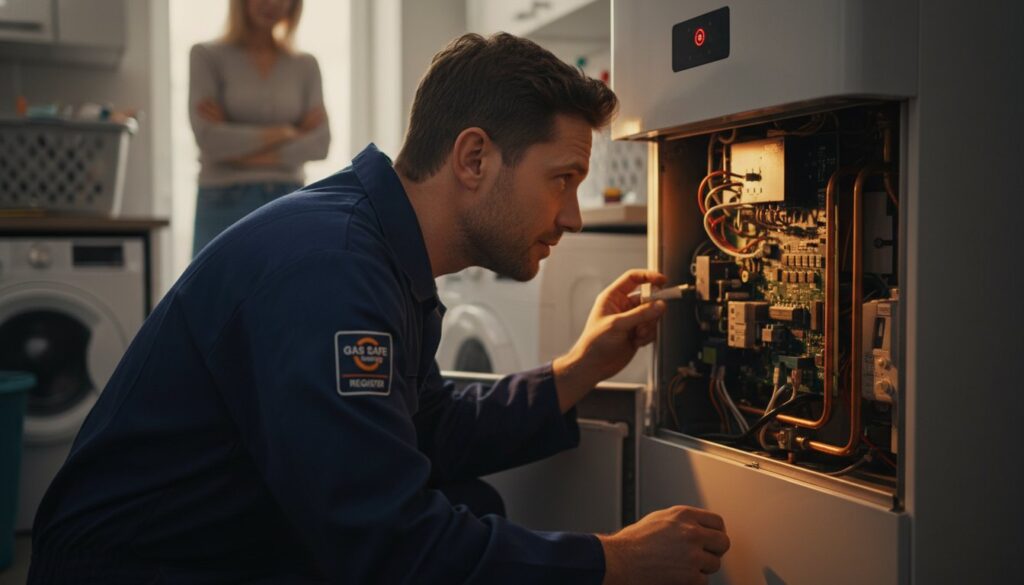
The first stage of a visit involves a thorough diagnostic check. Engineers use digital flue gas analysers to measure combustion levels and pressure gauges to check for leaks. They examine the entire central heating system, not just the boiler unit itself. This systematic approach prevents “parts changing” where homeowners pay for components they don’t actually need.
Clear communication is a hallmark of a trusted service. Your engineer will explain the fault in plain English and provide a breakdown of the required parts. Most professionals carry high-failure components like fans, sensors, and pumps on their vans for same-day fixes. If your system is suffering from poor circulation or cold spots, the engineer might recommend a power flush to clear internal sludge and restore heat flow.
Once the repair is complete, the job isn’t over. The engineer performs post-repair safety testing to ensure the appliance operates within legal limits. They’ll check the gas tightness and the flue integrity before leaving. Finally, they issue a gas safety record. This document is your proof that the emergency boiler work was completed to professional standards.
Book a Gas Safe Registered engineer today for a fast and reliable repair.
Preventing Future Emergencies: Maintenance and Smart Upgrades
Stopping a crisis before it starts is always more cost-effective than reacting to one. An emergency boiler failure often happens at the worst possible time, usually during the first cold snap of November. You can avoid the stress of a freezing home by taking control of your system’s health through consistent maintenance and modern technology.
The Value of Annual Servicing
Booking a summer service is the smartest way to prevent a winter emergency. During the warmer months, heating engineers have more availability, meaning you can choose a time that fits your schedule. A professional service goes far beyond a simple visual check. Our Gas Safe registered engineers dismantle the unit to inspect the heat exchanger, clean the burner, and test all safety devices. We also check the gas pressure and flue integrity to ensure your home is safe from carbon monoxide leaks. Most major manufacturers, such as Worcester Bosch or Vaillant, require a recorded annual service to keep your 10-year warranty valid. Regular professional maintenance can increase a boiler’s operational lifespan by up to 30% compared to neglected units.
Future-Proofing Your Home Heating
Modern upgrades act as an early warning system for your property. Smart thermostats like Nest or Hive do more than just manage your schedule. They monitor system performance and can send an alert to your phone if they detect a pressure drop or a failure to ignite. This allows you to call for a repair before the house loses its heat entirely. If your system relies on an old, corroded tank, consider upgrading to modern hot water cylinders. Unvented cylinders provide better pressure and are significantly more reliable than traditional gravity-fed systems.
You should also protect your boiler’s internal components from debris. Installing a magnetic system filter is one of the most effective ways to prevent an emergency boiler shutdown. These filters trap black iron oxide sludge before it can clog your pump or heat exchanger. For homeowners looking for long-term sustainability, air source heat pumps are a reliable, renewable alternative that can reduce your dependence on the gas grid. Investing in a boiler maintenance plan is the final piece of the puzzle. These plans spread the cost of your annual service and often provide priority access to engineers if a fault occurs.
Restore Your Home Comfort Without the Stress
Dealing with an emergency boiler breakdown is a high-stakes situation, but it doesn’t have to be a disaster for your household. You now have the tools to identify critical faults and understand when a professional repair is more cost-effective than a full replacement. We’ve highlighted how modern finance solutions make even the most unexpected heating repairs manageable for your monthly budget. You don’t need to wait for pay day to fix a freezing home. Our team provides Gas Safe Registered Engineers who are ready to handle any system crisis with precision and speed. We pride ourselves on same-day service availability to ensure your hot water is restored today. We also provide flexible finance options available to help you spread the cost of essential work. Take control of your home heating right now by choosing a team that values your safety and time. Book a fast, reliable Gas Safe engineer today and get your system running perfectly again. It’s time to get your home back to normal.
Frequently Asked Questions
How much does an emergency boiler repair cost in the UK?
Emergency call-out fees in the UK typically range from £100 to £200 according to 2024 industry data from Checkatrade. This fee usually covers the first hour of labor but excludes the cost of replacement parts. Total repair bills often fall between £300 and £500, depending on whether you need a new pump, fan, or heat exchanger.
Can I get a new boiler installed the next day if mine is beyond repair?
Yes, we provide next-day installation for homeowners across Portsmouth and Southampton when a system is condemned. Our rapid response team prioritizes households without heat or hot water to ensure your home stays safe. We aim to complete the full installation within 24 hours of your initial inquiry, provided we have the specific unit in stock.
Is a boiler breakdown considered a home emergency?
A total loss of heating or hot water is officially classified as a home emergency, especially during the winter months from October to March. This situation is particularly critical for vulnerable residents, such as the elderly or families with infants. An emergency boiler failure requires immediate attention to prevent frozen pipes or potential health risks associated with cold living conditions.
What are the most common reasons for a boiler to stop working suddenly?
Low system pressure is the most frequent cause of sudden shutdowns, accounting for approximately 30% of our emergency service calls. Other common issues include a frozen condensate pipe during cold snaps or a faulty thermocouple. Mechanical failures, such as a seized central heating pump or a broken fan, also trigger internal safety sensors that shut the system down instantly.
Can I pay for an emergency boiler installation in monthly installments?
You can spread the cost of your new system using our flexible retail finance options. We offer monthly installments that make a sudden emergency boiler replacement manageable for your household budget. Most credit applications receive a decision within 60 seconds, allowing our Gas Safe engineers to proceed with the installation without any financial delays.
How do I know if my heating engineer is Gas Safe registered?
You must ask to see the engineer’s physical Gas Safe ID card as soon as they arrive at your property. The front of the card features their photo and a unique 7-digit license number, while the back lists the specific appliances they’re qualified to fix. You can also verify these credentials instantly on the official Gas Safe Register website to ensure they’re legally permitted to work on gas.
What should I do if I smell gas near my boiler?
Turn off your gas supply at the meter immediately and open every window in your home to ventilate the area. Don’t use any electrical switches, light matches, or smoke, as even a small spark can trigger an explosion. Call the National Gas Emergency Service on 0800 111999 and evacuate the building until a professional confirms that the site is safe.
Does my home insurance cover emergency boiler repairs?
Standard home insurance policies often exclude boiler breakdowns unless you’ve specifically added “Home Emergency” or “Boiler and Heating” cover. Statistics from the Association of British Insurers suggest that 25% of homeowners opt for this additional protection. You should check your policy schedule for these specific terms, as they usually cover call-out fees and a set amount for parts and labor.