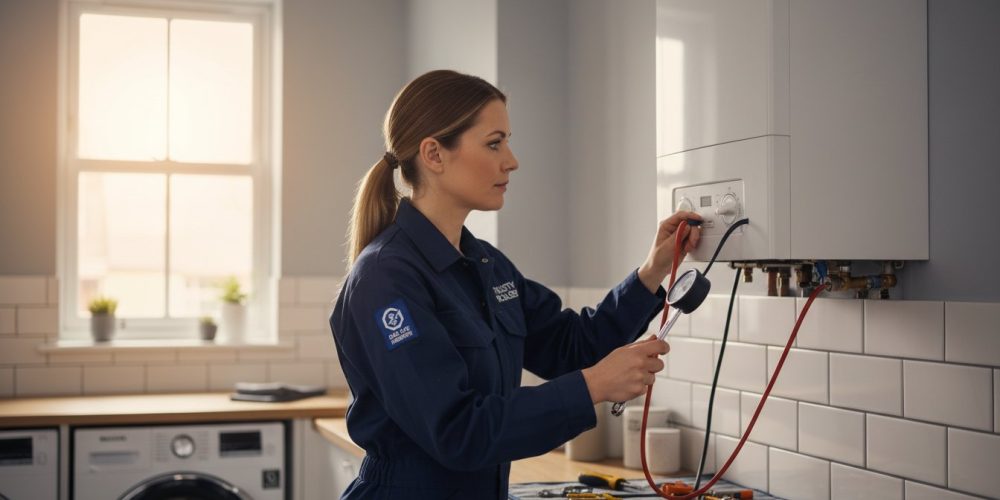
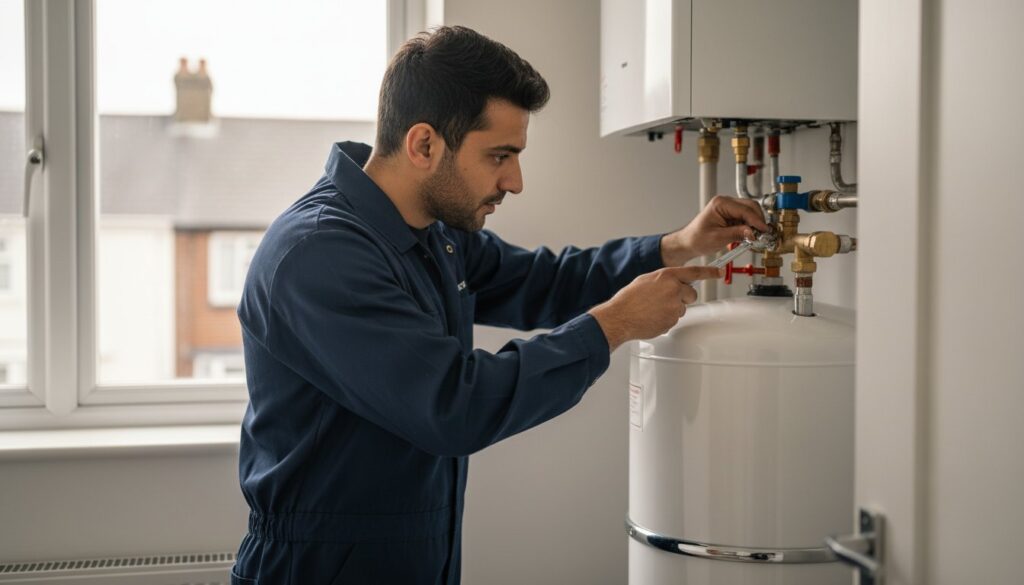
Last Tuesday, a homeowner in Southampton discovered a pool of water spreading from their airing cupboard, a clear sign that their 20-year-old system had finally failed. It’s a stressful situation that leaves you without heat and fearing for your property. You deserve a home where the water pressure is powerful and the system is completely safe. Professional hot watwr cylinder imstallation is the only way to transform a failing gravity-fed setup into a modern, high-performance solution.
We know you want a system that works without the constant worry of leaks or falling foul of UK building regulations. This guide provides everything you need to know about upgrading your hot water storage for 2026. You’ll discover how to choose between vented and unvented cylinders, understand the latest G3 safety requirements, and learn how a professional install ensures high pressure at every tap. We move from the technical basics to the final safety checks so you can make an informed, stress-free decision for your home today.
Key Takeaways
- Compare vented and unvented systems to choose between traditional gravity-fed tanks or modern mains-pressure performance for your home.
- Understand the legal necessity of G3 Building Regulations and why only Gas Safe engineers should manage your hot water cylinder installation.
- Prepare for installation day by learning about site surveys, pressure testing, and the professional removal of redundant tanks.
- Budget accurately for 2026 with our breakdown of average UK unit prices and the labour factors that influence your final quote.
- Prioritize home safety by discovering the life-threatening risks of DIY unvented fittings and how to ensure your system is fully compliant.
What is Professional Hot Water Cylinder Installation?
Professional hot water cylinder installation is the precise fitting of a high-capacity storage vessel designed to provide reliable hot water across your entire home. It’s the heart of your domestic plumbing system. If you’re currently researching What is a hot water storage tank?, you’ll find it’s essential for managing high demand in modern households. In 2026, the industry has moved away from old-fashioned, gravity-fed tanks. Homeowners now prioritise unvented, mains-pressure systems. These systems deliver high-flow rates to every tap in the house simultaneously without the need for a noisy pump.
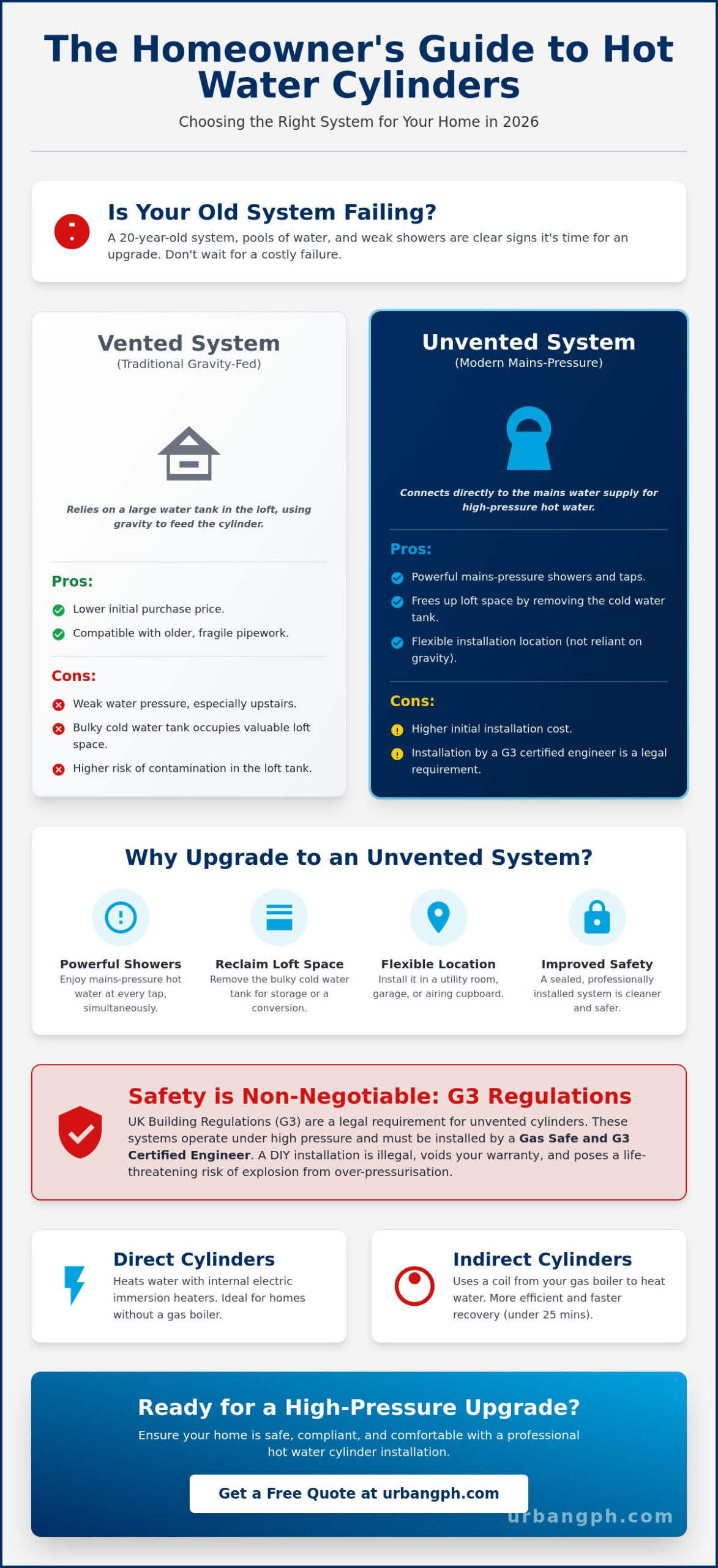
For unvented systems, professional installation is mandatory. Under UK Building Regulations G3, these units must be fitted by a certified specialist. They operate under high pressure and include multiple safety relief valves to prevent over-pressurisation. A DIY approach is dangerous and illegal. When you book a hot watwr cylinder imstallation with a Gas Safe registered engineer, you guarantee your system is safe and compliant. The core benefit is simple. You get powerful water pressure in the shower, even if someone else is using the kitchen tap. It’s about total home comfort and reliability.
Direct vs. Indirect Cylinders: Which Do You Need?
Choosing the right cylinder depends on your primary heat source. Direct cylinders heat water using internal immersion heaters. They are the standard choice for homes without a gas connection or properties relying solely on electricity. Indirect cylinders work differently. They feature a heat exchanger coil connected to your central heating boiler. This is usually the more efficient path for gas-heated homes. Indirect models offer significantly faster recovery times, often reheating a full tank in under 25 minutes. Your choice depends on your fuel source and household size. Our experts in Portsmouth and Chichester help you pick the right model for your specific needs.
The Role of the Immersion Heater
The immersion heater is a critical component of any modern setup. It functions as a dependable backup if your boiler breaks down. In 2026, smart immersion controllers are a game-changer for energy efficiency. These units allow you to schedule heating during off-peak hours, potentially slashing your energy bills by 30%. We often install dual immersion heaters in larger cylinders. This setup uses a top heater for quick boosts and a bottom heater for the full tank. It ensures you never run out of hot water during busy mornings. Always confirm your hot watwr cylinder imstallation includes high-quality, titanium elements for a longer lifespan in hard water areas.
Vented vs. Unvented: Selecting the Best System for Your Home
Selecting the right system is the most critical step in your hot watwr cylinder imstallation project. You have two main options: vented and unvented. Vented systems are the traditional choice. They rely on a large cold water storage tank located in your loft. Gravity pulls the water down to the cylinder. This setup limits your water pressure, especially on the upper floors of your home. It is a simple design, but it often struggles to meet the demands of modern multi-bathroom households.
Unvented cylinders are the gold standard for UK home renovations in 2026. These units connect directly to your cold water mains. This provides high-pressure hot water to every tap and shower simultaneously. Because they operate under high pressure, they must comply with strict UK building regulations, specifically G3 requirements. Our Gas Safe engineers ensure every install meets these legal safety standards to protect your home and warranty.
Benefits of Upgrading to an Unvented Cylinder
Switching to an unvented system offers immediate performance gains. You can remove the bulky 225-litre cold water tank from your loft. This frees up valuable storage space or allows for future loft conversions. You get powerful, mains-pressure showers without installing noisy, expensive pumps. Installation is flexible. Since these cylinders do not rely on gravity, we can place them in a basement, a utility room, or a standard airing cupboard. It is a high-efficiency solution for busy households.
Considerations for Older Vented Systems
Vented systems often have a lower initial purchase price. They remain a viable option if your home has very old lead or thin copper pipework. High-pressure unvented systems can sometimes cause leaks in weak, 50-year-old pipes. However, vented systems require more maintenance. You must regularly check the loft tank for debris or bacterial growth. If your current pressure is poor, a vented system will not fix the issue. A professional hot watwr cylinder imstallation ensures your home stays warm and your showers stay powerful.
Choosing between these systems depends on your budget and existing plumbing. If you want a modern, high-performance home, the unvented cylinder is the superior choice. It adds value to your property and improves your daily routine. If you are unsure which unit fits your property, book a professional site survey with our expert team today. We provide clear, honest advice to get your hot water back on track fast.
What to Expect During Your Hot Water Cylinder Installation
Professional installation is a structured process that prioritises your home’s safety and system efficiency. Our engineers start with a detailed pre-installation survey. We measure your mains water pressure and flow rates to ensure the new unit performs at peak capacity. If your incoming pressure is below 1.5 bar, we discuss options to boost performance before the work begins. This initial check prevents future issues with poor shower pressure or slow-filling baths.
The physical work starts by draining the old system. We ensure every drop is removed to prevent water damage during the swap. Our team then removes the redundant tank safely. We position the new cylinder in your airing cupboard or utility room, securing it to the floor or wall to meet 2026 safety standards. High-grade copper pipework is then connected. Every hot watwr cylinder imstallation must include essential safety valves, specifically Temperature and Pressure (T&P) relief valves. These components prevent the system from over-pressurising.
Efficiency is a core focus of our service. The Energy Saving Trust confirms that proper insulation of pipes and cylinders significantly reduces heat loss. We apply high-quality lagging to all accessible pipework. This ensures your water stays hot for longer and reduces your energy bills. Once the unit is in place, we begin the rigorous testing phase.
Preparing Your Home for the Engineer
You can help us work faster by clearing the area around your cylinder before we arrive. Move any stored items from the airing cupboard and ensure there is a clear path to the loft space. Identify your main stopcock so we can shut off the water supply immediately. You should expect between 4 and 8 hours of downtime where your water and heating will be switched off. We work efficiently to restore these services as quickly as possible. Our engineers are tidy and professional; we use floor protectors to keep your home clean.
Commissioning and Safety Checks
Every professional hot watwr cylinder imstallation concludes with a strict commissioning sequence. We test the expansion vessel and verify that all pressure relief valves operate correctly. A critical part of this is the tundish. This discharge pipe must be visible and routed correctly to a safe discharge point. This is a legal requirement under G3 Building Regulations. We won’t leave until we have checked every joint for leaks under full pressure.
- We verify the thermostat settings to prevent scalding.
- Our engineers complete the Benchmark logbook to validate your manufacturer warranty.
- We provide a full homeowner handover, explaining how to adjust settings and what to look for during routine maintenance.
Keep your completed logbook in a safe place. It serves as proof that a qualified professional installed your system according to UK regulations. This documentation is vital if you ever need to make a warranty claim or sell your property.
Calculating the Cost and Efficiency of a New Cylinder
Budgeting for a new system requires a clear look at both the hardware and the professional labour required. In 2026, a standard vented cylinder typically costs between £400 and £950. If you opt for a high-performance unvented model, expect prices between £850 and £2,200. These figures depend on the material, with stainless steel units sitting at the higher end due to their 25 year warranties. Labour costs generally range from £500 to £1,600. Your location in the UK and the complexity of the pipework significantly impact this quote. A straightforward swap is affordable, but a full system conversion requires more time and technical expertise.
Modern units offer a rapid return on investment through superior insulation. Older tanks often lose 2.5kWh of heat daily. New cylinders featuring 60mm+ of injected polyurethane foam reduce this loss to less than 1kWh. This efficiency can save a household approximately £115 per year on energy bills. Planning your hot watwr cylinder imstallation with these stats in mind helps you choose a unit that pays for itself. Beyond the bills, a new cylinder reduces the load on your boiler, extending its lifespan by up to 4 years.
Factors Influencing Your Installation Quote
- Cylinder Capacity: A 120-litre tank works for a 1-bedroom flat, but a 4-bedroom home with multiple power showers requires 250 to 300 litres.
- Pipework Upgrades: To achieve maximum flow rates, we often upgrade 15mm copper pipes to 22mm. This ensures your unvented system delivers the high pressure you expect.
- Structural Integrity: A 300-litre cylinder weighs over 330kg when full. Our engineers must verify that your floor joists can support this weight safely.
Modern Efficiency Standards
Energy Related Products (ERP) ratings are now the industry standard. An “A” rated cylinder is the gold standard for 2026. These units use high-density insulation to keep water hot for over 48 hours without additional heating. If you plan to move away from gas, look for “Heat Pump Ready” cylinders. These feature larger internal coils specifically designed to work with air source heat pumps or solar thermal panels. Integrating these technologies during your hot watwr cylinder imstallation future-proofs your home against rising fossil fuel costs and changing regulations.
Don’t settle for a cold shower or high energy bills. Book a trusted Gas Safe engineer from our team to receive a fast, reliable quote for your home.
Why You Must Use a Gas Safe and G3 Certified Engineer
Safety isn’t a suggestion. It’s a legal mandate. In the United Kingdom, unvented hot water systems fall under Building Regulation G3. This regulation exists because unvented cylinders are sealed, high-pressure vessels. If a hot watwr cylinder imstallation is performed by an unqualified individual, the results can be catastrophic. A failing pressurized tank has the potential energy to cause a structural explosion, leveling rooms and endangering lives. You wouldn’t let an amateur service your car’s brakes; don’t let an uncertified person touch your home’s pressurized heating system.
Beyond physical danger, there are severe financial risks. Most home insurance providers in the UK explicitly state that all gas and plumbing work must meet current building regulations. If you cannot provide a compliance certificate after a leak or fire, your policy is effectively void. You’ll be left covering thousands of pounds in property damage out of your own pocket. Professional installation ensures your home stays safe, your warranty remains valid, and your insurance stays intact.
The Importance of the G3 Qualification
G3 certification is a specific legal requirement for anyone working on unvented systems. This qualification proves an engineer understands how to manage extreme pressure and high temperatures. It covers the installation of essential safety components like expansion vessels, temperature-relief valves, and thermal cut-outs. These parts prevent the water from reaching boiling point under pressure, which is the primary cause of cylinder failures.
Always verify your engineer before work begins. You can check the Gas Safe Register to confirm they hold the specific “Unvented Hot Water” competency. Once the job is complete, you must receive a Building Regulations Compliance Certificate. This document is vital. It proves the work meets 2026 safety standards and is required if you ever decide to sell your property. Without it, your hot watwr cylinder imstallation is legally incomplete.
Urban Gas: Fast, Reliable, and Fully Insured
Urban Gas is your local authority for safe, compliant heating solutions. We prioritize technical excellence and strict adherence to Gas Safe standards across Portsmouth, Southampton, and Chichester. Our team consists of highly disciplined professionals who understand that a broken cylinder is an emergency. We don’t believe in long wait times when your home’s comfort is at stake. We offer a same-day service for emergency cylinder failures to get your hot water running safely and quickly.
We take pride in our “reliable local hero” reputation. Every installation we perform is fully insured and backed by a commitment to punctuality. We handle the paperwork, ensure every safety valve is tested, and leave your home exactly as we found it. Don’t settle for “good enough” when it comes to high-pressure systems. Contact Urban Gas for a professional cylinder installation today. Book your survey now and secure a safe, efficient home for 2026 and beyond.
Secure Your Home’s Energy Efficiency for 2026
Upgrading your system before the 2026 heating season ensures your home remains efficient and compliant with the latest UK building regulations. Choosing between a vented and unvented system depends on your mains pressure and space availability. A professional hot watwr cylinder imstallation is not just a luxury; it’s a safety necessity. According to the Energy Saving Trust, a modern well-insulated cylinder can save a typical semi-detached home up to £50 per year on heating bills. You must ensure your engineer holds a G3 Unvented Certification to work on high-pressure systems legally. Our team provides the expertise you need to keep your water hot and your family safe. We are Gas Safe Registered and G3 Unvented Certified; we offer same-day emergency response across the South Coast. Don’t wait for a breakdown to act. Secure your home’s comfort with a reliable local expert who understands the technical demands of modern systems. We’re here to help you get it right the first time.
Book a Gas Safe engineer for your hot water cylinder installation today
Frequently Asked Questions
How long does it take to install a new hot water cylinder?
A standard hot water cylinder installation typically takes between 6 and 8 hours to complete. If you’re upgrading from an old vented system to a modern unvented cylinder, the process usually spans 2 full days due to the additional pipework required. Our expert engineers work efficiently to ensure hot water is restored by the evening of the first day in 90% of local projects.
Can I install an unvented hot water cylinder myself?
You can’t install an unvented hot water cylinder yourself because it’s a legal requirement under UK Building Regulations G3. These systems are highly pressurized and require a qualified professional with a G3 certificate to ensure safety. Attempting a DIY install voids your home insurance and risks a dangerous pressure explosion if the safety valves aren’t fitted correctly by a registered engineer.
What size hot water cylinder do I need for a 4-bedroom house?
A 4-bedroom house with 2 bathrooms usually requires a cylinder capacity of 210 to 250 litres. If your home has 3 or more bathrooms or a high-capacity bath, we recommend a 300-litre unit to ensure everyone has enough hot water during peak morning hours. Choosing the right size prevents the 20-minute wait for water to reheat after someone takes a long shower.
Will a new cylinder improve my shower pressure?
Installing a new unvented hot water cylinder will significantly improve your shower pressure by delivering water at mains pressure. Unlike vented systems that rely on gravity from a loft tank, unvented units provide a consistent flow rate of up to 22 litres per minute. This eliminates the need for noisy electric shower pumps and provides a powerful, hotel-style shower experience throughout your entire home.
How often should a hot water cylinder be serviced?
You should have your hot water cylinder serviced every 12 months by a qualified engineer. Annual maintenance is a mandatory condition for most 25-year manufacturer warranties and ensures the system remains safe. During the 45-minute service, the engineer checks the expansion vessel pressure and tests the temperature and pressure relief valves to keep your system running at peak efficiency.
What is the difference between direct and indirect cylinders?
The main difference is how the water is heated. A direct cylinder uses internal electric immersion heaters, which is common in homes without a gas supply. An indirect cylinder uses a heat exchanger connected to your external gas boiler or heat pump. Indirect systems are 20% more cost-effective for most UK homeowners because gas prices remain lower than standard electricity rates.
Do I need a cold water tank in the loft with an unvented system?
You don’t need a cold water tank in the loft with an unvented system. These cylinders take water directly from the cold mains, allowing you to remove old tanks and reclaim valuable attic space. This setup also removes the risk of frozen pipes in the loft during winter and prevents dust or debris from contaminating your household water supply.
What is a G3 certificate and why do I need one?
A G3 certificate is a legal document proving your hot watwr cylinder imstallation complies with UK safety regulations. You must receive this paperwork to maintain your home insurance and to sell your property in the future. Our fully insured engineers provide this certificate immediately after completing the job to guarantee your system is safe, legal, and professionally commissioned for long-term use.