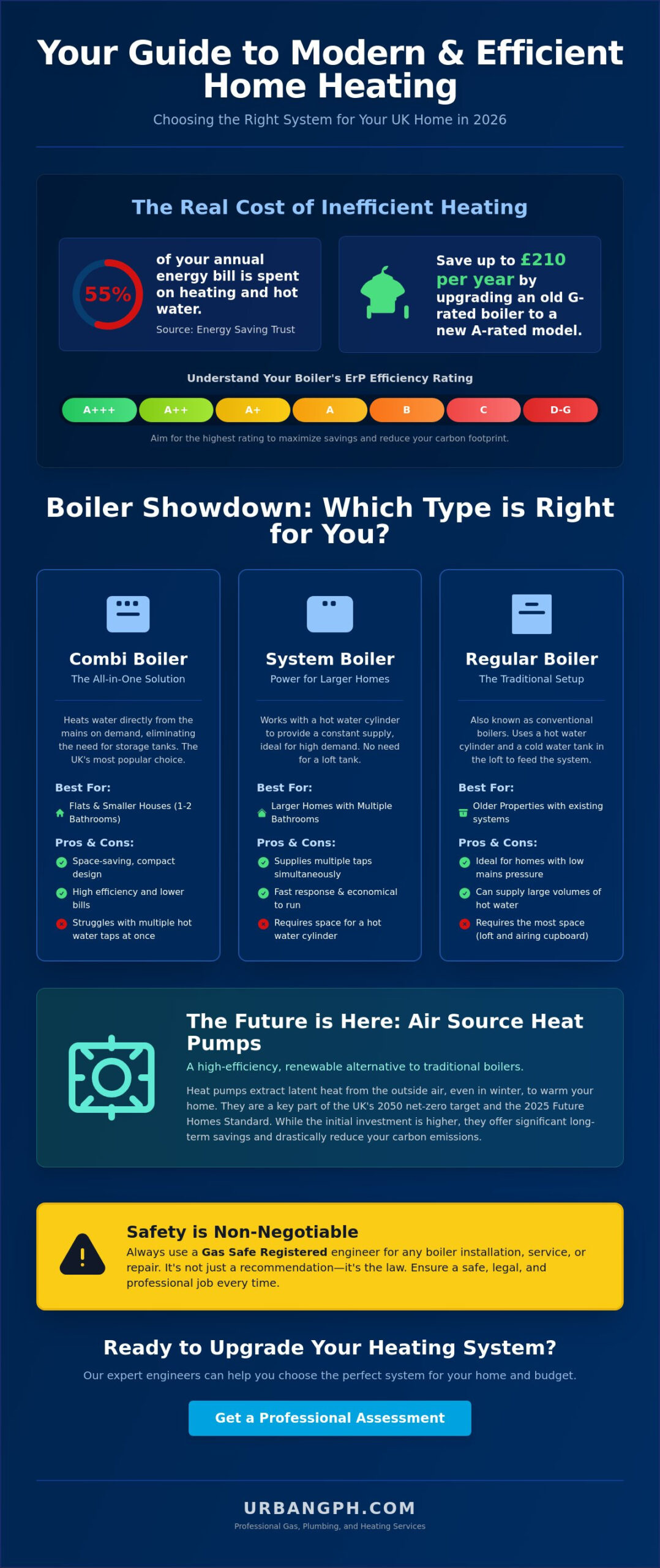
Did you know that heating and hot water account for about 55% of your annual energy bills according to the Energy Saving Trust? For many UK homeowners, this means hundreds of pounds are wasted every year on outdated or poorly configured heating systems. It is frustrating to face rising costs while worrying if your boiler will survive the next winter freeze. You want a warm home without the stress of confusing technical jargon or the fear of a sudden, expensive breakdown.
We understand that choosing between a traditional gas boiler and a modern air source heat pump feels overwhelming. This guide cuts through the noise to show you exactly how to lower your monthly bills and secure a reliable heat source. We provide a clear breakdown of the most efficient setups for 2026, comparing installation requirements against long term savings. You’ll learn which system fits your property type and how to transition to a greener, cheaper way of living with total confidence.
Key Takeaways
- Compare combi, system, and regular boilers to identify the most reliable setup for your home’s specific hot water demands.
- Discover how modern air source heat pumps extract energy from the outside air to provide a high-efficiency renewable alternative.
- Maximise the lifespan of your heating systems and prevent emergency breakdowns by identifying the warning signs of sludge buildup.
- Ensure a safe, legal, and professional installation by understanding the vital role of Gas Safe Registered engineers.
Understanding Modern Heating Systems in the UK
The way we keep our homes warm has changed rapidly. In the mid-20th century, coal fires were the standard across most British households. Today, the focus has shifted entirely toward high-efficiency gas boilers and renewable solutions. Your choice of setup is the most important financial decision you’ll make for your property. It accounts for over 50% of your total annual energy spend. A Central heating system provides consistent warmth across your entire home from a single, primary heat source. As the UK moves toward its 2050 net-zero target, the 2025 Future Homes Standard has already reshaped how we install new heating systems. Homeowners in Portsmouth and Southampton now prioritize carbon reduction alongside monthly savings.
The Core Components of Your Heating Setup
Your system consists of three vital parts. The heat source is the engine. This is typically a Gas Safe registered boiler, an air source heat pump, or an electric heater. This unit generates the thermal energy needed for your home. The distribution system then moves this energy. It uses a network of pipework to feed radiators or underfloor heating circuits. Finally, the control system dictates performance. We use smart thermostats and Thermostatic Radiator Valves (TRVs) to give you room-by-room precision. This setup ensures your home stays comfortable without burning unnecessary fuel. Trust our expert engineers to keep these parts in peak condition.
Why Efficiency Matters in 2026
System efficiency is the direct link between your boiler and your bank account. Upgrading an aging G-rated boiler to a modern A-rated condensing model can save up to £210 per year for a standard semi-detached house. High-efficiency technology also slashes your carbon footprint, which is essential as the UK tightens environmental regulations. Modern units use less fuel to produce more heat, meaning they work less and last longer. The Energy-related Products (ErP) rating is a standardized scale that ranks the energy performance and environmental impact of heating appliances from A+++ down to G. Always look for the highest rating to ensure your home remains energy-efficient and compliant with current standards. Our fully insured team specializes in installing these high-performance heating systems to guarantee your long-term peace of mind.
Choosing Between Combi, System, and Regular Boilers
Selecting the right boiler is the most critical decision you’ll make for your home heating systems. In the UK, three main gas boiler types dominate the market. Each has distinct requirements for space, pipework, and water pressure. Our Gas Safe Registered engineers across Portsmouth and Southampton frequently replace outdated units with modern, A-rated alternatives that exceed 90% efficiency. Making the wrong choice can lead to poor water pressure or unnecessary energy bills, so understanding the mechanics is vital.
Combi Boilers: The Space-Saving Solution
Combination (combi) boilers are the most popular choice for modern UK households. They function as both a high-efficiency water heater and a central heating unit in a single compact box. Because they heat water directly from the mains when you turn on a tap, they don’t require a bulky cold water tank in the loft or a hot water cylinder in an airing cupboard. This makes them the default choice for flats and smaller houses where space is at a premium.
However, combis have limits. They struggle to supply high volumes of hot water to multiple outlets simultaneously. If you have a large family trying to use two showers at once, you’ll likely experience a significant drop in pressure. For properties with more than two bathrooms, a combi might not be the most reliable option. If you’re unsure, book a professional assessment to check your local mains pressure before committing.
System and Regular Boilers for Larger Homes
Larger households in Chichester and the surrounding areas often require stored hot water to meet high demand. System boilers work with a separate cylinder but keep the major components, like the pump and expansion vessel, inside the boiler itself. This setup provides a constant supply of hot water to multiple taps without a drop in performance. Regular (traditional) boilers go a step further, requiring both a cylinder and a cold water storage tank in the loft. These are often found in older properties with traditional radiator layouts.
When choosing between these, consider the type of cylinder you need. Modern unvented cylinders deliver hot water at mains pressure, while older vented systems rely on gravity. You can find more detail in our guide to hot water cylinders to see which fits your plumbing. The government is also pushing for higher efficiency through new future boiler standards, which aim to reduce carbon emissions across all boiler types. Upgrading an aging regular boiler to a modern system or combi setup can save hundreds of pounds annually. Removing old loft tanks also eliminates the risk of leaks or freezing pipes during harsh South Coast winters.
- Combi: Best for 1-3 bedroom homes with limited space.
- System: Ideal for 3+ bedroom homes with multiple bathrooms.
- Regular: Best for replacing old boilers in homes with existing tanks and older radiators.
Switching from a regular boiler to a combi involves significant pipework changes but frees up an entire airing cupboard. Our team provides same-day service for emergency replacements, ensuring your home stays warm and compliant with all safety regulations. Professional installation is the only way to guarantee your system operates at peak performance for years to come.
Renewable Alternatives: The Rise of Air Source Heat Pumps
Air source heat pumps (ASHPs) are transforming how we design modern heating systems in 2026. These units function like a refrigerator in reverse. They extract thermal energy from the outside air and use a compressor to increase the temperature for use in your home. Even when external temperatures drop to -15°C, these systems continue to pull usable heat from the environment. This technology is a cornerstone of the UK’s drive toward Net Zero.
The shift from traditional gas to renewable energy requires a change in how we manage indoor climate. Standard gas boilers are high-temperature systems, often heating water to 70°C. In contrast, heat pumps are low-temperature systems that operate most efficiently between 35°C and 45°C. This provides a consistent, steady warmth rather than the “on-off” blasts of heat associated with older technology. It is a more disciplined approach to home comfort.
Financial incentives make the transition more accessible for homeowners in 2026. The UK government’s Boiler Upgrade Scheme currently provides a £7,500 grant to help cover the initial installation costs. While the capital outlay is higher than a standard boiler replacement, the long-term ROI is found in system longevity and efficiency. A professional installation by a trusted engineer ensures the unit lasts up to 20 years. You also gain protection against the volatile pricing of fossil fuels.
Practical installation requires specific site conditions. You need a clear outdoor space for the fan unit, typically requiring 300mm to 500mm of clearance from the wall for optimal airflow. Noise levels are now strictly regulated, with most 2026 models operating at roughly 45 decibels, which is quieter than a standard dishwasher.
Is Your Home Heat Pump Ready?
Efficiency starts with your property’s thermal envelope. High levels of loft and cavity wall insulation are essential to prevent heat loss. Because the water temperature is lower, you must evaluate your radiator sizes. Larger surface areas are often required to deliver the same amount of warmth to a room. The Coefficient of Performance (CoP) for ASHPs is a numerical ratio that represents the amount of heat energy produced for every unit of electricity consumed.
Hybrid Heating: The Best of Both Worlds
Hybrid heating systems are an excellent solution for older properties in Portsmouth, Southampton, or Chichester. This setup combines a reliable gas boiler with an air source heat pump. A smart controller monitors external temperatures and energy prices in real-time. It automatically switches to the heat pump for base-load heating but engages the boiler during extreme cold snaps or for rapid hot water recovery. This ensures peak reliability. It acts as a bridge for the UK transition, allowing homeowners to reduce carbon emissions without a total overhaul of their existing pipework.
Maximising Efficiency and System Lifespan
Your home relies on a high-performing boiler to stay warm. A neglected system works harder, uses more fuel, and fails sooner. In 2026, the cost of energy makes efficiency a priority. Maintaining heating systems properly ensures you aren’t overpaying for comfort. Small investments in maintenance prevent the high cost of a premature replacement. We provide the expert care needed to keep your home running smoothly.
Sludge is the silent killer of efficiency. Over time, black iron oxide, known as magnetite, builds up inside your radiators and pipework. This debris creates blockages that force your pump to work double time. You will notice cold spots at the bottom of your radiators or a noisy, vibrating boiler. These are red flags that your system is struggling. Ignoring these signs leads to a 12% drop in efficiency within just three years.
The Importance of Gas Safe Servicing
Annual servicing is a safety requirement for any gas-fired appliance. Our Gas Safe registered engineers perform a rigorous multi-point check to keep your home safe. We test flue gases, check for carbon monoxide leaks, and inspect internal components for wear. This is a critical step for modern heating systems. Most manufacturer warranties are only valid if you provide proof of an annual professional service. We provide the documentation you need to keep that guarantee intact across Portsmouth, Southampton, and Chichester.
Power Flushing and System Cleansing
A power flush is a deep clean for your central heating. We use high-velocity, low-pressure pumps to circulate specialized chemicals through your pipes. This process removes the magnetite and lime scale that restrict heat transfer. According to industry data from Gastec, a clean system can reduce fuel consumption by up to 15%. This provides immediate savings on your energy bills. It also protects your heat exchanger from failing, which is one of the most expensive repairs a homeowner can face.
Smart upgrades offer another route to efficiency. Installing Smart Thermostatic Radiator Valves (TRVs) allows you to control the temperature in every room independently. This simple change can reduce wasted heat by 18% without the need for a full boiler swap. We focus on these high-impact solutions to give you the best return on investment. Our team provides fast, reliable upgrades that make a difference from day one.
Don’t wait for a total breakdown to call the experts. Protect your home and your wallet with a professional check-up. Book a trusted engineer today for fast, reliable service you can count on.
Professional Installation and Expert Support
Installing modern heating systems isn’t a weekend DIY project. It’s a high-stakes task that requires specialized tools and legal certification. In the United Kingdom, the Gas Safety (Installation and Use) Regulations 1998 make it illegal for anyone but a qualified professional to work on gas appliances. Attempting a DIY install puts your home at risk of carbon monoxide leaks, fires, and explosions. It also immediately voids your manufacturer warranty and home insurance policy.
A professional installation day with Urban Gas is streamlined and disciplined. Our engineers arrive on time and prepared. We start by protecting your carpets and work surfaces with heavy-duty covers. The process involves decommissioning your old unit, installing the new system, and performing a Central Heating System Flush to remove sludge and debris. We don’t leave until the system is fully commissioned and we’ve shown you exactly how to use the controls. We handle the paperwork, including the building regulations notification, so you don’t have to.
Choosing a reliable partner means looking for long-term support, not just a one-off fix. Urban Gas provides a fast, reliable service that covers everything from initial surveys to emergency repairs. We’re the steady hand you need when things go wrong. Our promise is simple: we’re fully insured, highly disciplined, and committed to technical excellence. Whether you’re in Portsmouth, Southampton, or Chichester, we provide the local authority and rapid response your home deserves.
Why Use a Gas Safe Registered Engineer?
Every engineer at Urban Gas is Gas Safe Registered. This is your only guarantee that the person working in your home is legally qualified and competent. You can verify our credentials instantly by checking our license number on the official Gas Safe Register website. Expert workmanship provides peace of mind and ensures your heating systems operate at peak efficiency. We’re a trusted national authority for heating solutions, delivering compliant results that prioritize your family’s safety above all else.
Next Steps for Your Home Heating
Take control of your home comfort today. Request a professional survey to get an accurate, fixed-price quote for your upgrade. Our experts assess your property’s specific heat loss requirements to recommend the perfect boiler or heat pump. To prepare for your installation, please clear the area around your current boiler and ensure our team has clear access to the water mains. Don’t wait for a winter breakdown. Book your expert heating consultation today and secure a warm, energy-efficient home for 2026.
Future-Proof Your Home’s Comfort Today
Selecting the right heating systems for your property is no longer just about warmth; it’s about long-term efficiency and compliance with the UK’s evolving energy standards. With the 2025 Future Homes Standard shifting the landscape, transitioning to low-carbon technology or upgrading to an A-rated boiler can reduce energy waste by up to 30%. Professional installation is the only way to guarantee these results. A correctly calibrated system doesn’t just lower bills; it ensures your home remains a safe and comfortable environment regardless of the weather outside.
Our team delivers the speed and precision required for modern home services. We provide emergency same-day service to resolve issues before they escalate. You’ll work with Gas Safe Registered engineers who offer fully insured professional workmanship on every visit. We’ve built our reputation on being the reliable local experts you can trust when it matters most. Take control of your home’s efficiency and enjoy total peace of mind throughout the year.
Book a Fast, Reliable Heating Engineer Today
Frequently Asked Questions
What is the most efficient heating system for a UK home in 2026?
Air source heat pumps are the most efficient heating systems for UK homes in 2026. These units deliver 3 to 4 units of heat for every 1 unit of electricity used, achieving efficiency ratings between 300% and 400%. Modern ASHPs operate effectively even when outdoor temperatures drop to -15°C. This makes them a superior choice compared to traditional gas boilers which peak at 92% to 94% efficiency.
How often should I have my heating system serviced?
You must book a professional service every 12 months to ensure safety and maintain your manufacturer warranty. Our Gas Safe registered engineers check for carbon monoxide leaks and clean internal components to prevent unexpected breakdowns. Regular maintenance reduces the risk of emergency failures by 60% according to industry reports. Don’t wait for winter to find a problem. Call a local expert today to keep your home warm and compliant.
Can I replace my gas boiler with an air source heat pump?
You can replace a gas boiler with an air source heat pump, provided your home meets specific insulation standards. The UK government currently offers a £7,500 grant through the Boiler Upgrade Scheme to help with transition costs. You might need to install larger radiators or underfloor heating to account for lower flow temperatures. Our team provides expert assessments across Portsmouth and Southampton to determine if your property is heat pump ready.
What are the signs that my heating system needs a power flush?
Cold spots at the bottom of radiators and excessive boiler noise are the clearest signs your heating systems need a professional power flush. This process removes magnetite sludge that can reduce system efficiency by 15% and cause pump failure. If your radiators take longer than 20 minutes to heat up, it’s time for a Central Heating System Flush. We use specialized equipment to restore circulation and protect your boiler’s internal parts.
Is a combi boiler better than a system boiler for a 4-bedroom house?
A system boiler is typically better for a 4-bedroom house with two or more bathrooms. Combi boilers struggle to provide hot water to multiple taps simultaneously, which often leads to pressure drops in larger households. System boilers use a separate unvented cylinder to store large volumes of hot water, ensuring consistent pressure for every shower. Choose a system setup if your family uses more than 150 liters of hot water daily.
How much can I save by upgrading to a modern heating system?
Upgrading from a G-rated boiler to a modern A-rated condensing model can save you up to £540 per year on energy bills. These figures, based on 2024 Energy Saving Trust data, reflect the massive efficiency gains found in new technology. Modern controls and smart thermostats can add another 10% in savings by preventing unnecessary heating. It’s a reliable way to lower your carbon footprint while reducing monthly household outgoings significantly.
What should I do if my heating system fails unexpectedly?
Call a Gas Safe registered engineer immediately for an emergency repair if your heating fails. Check your consumer unit for tripped breakers and ensure your thermostat has fresh batteries before the engineer arrives. We provide same-day service across Chichester and the South Coast to get your heat back on fast. Our fully insured team handles everything from minor leaks to complete boiler swaps. Don’t stay in the cold; contact us now.