What if you could secure a £7,500 government grant and pay 0% VAT to upgrade your home before the March 2027 deadline? Many homeowners worry that air source heating won’t keep them warm during a freezing UK winter or that the upfront costs are just too high. You need a heating solution that’s reliable, affordable, and ready for the strict Future Homes Standard regulations starting March 24, 2027. We know you want a warm home without the stress of unpredictable energy bills.
We understand the confusion surrounding grant eligibility and system performance. It’s vital to have the facts before making a change. This guide proves that heat pumps are now a high-efficiency reality that can slash your carbon emissions by 65%. We’ll provide a clear breakdown of the £7,500 Boiler Upgrade Scheme (BUS), explain the 0% VAT benefits available until March 2027, and show you how professional installation ensures your home stays warm year-round. Discover how to transition to a zero-carbon ready home with total confidence and professional support.
Key Takeaways
- Discover why 350% efficiency makes air source heating the most effective way to heat your home compared to traditional 92% efficient boilers.
- Learn the importance of professional room-by-room heat loss calculations to guarantee your home stays warm even in freezing temperatures.
- Find out how to navigate the £7,500 Boiler Upgrade Scheme and access flexible finance options to make your installation affordable.
- Follow our step-by-step guide to the installation process, from selecting the best outdoor site to final system commissioning by expert engineers.
Understanding Air Source Heating: How It Works in UK Homes
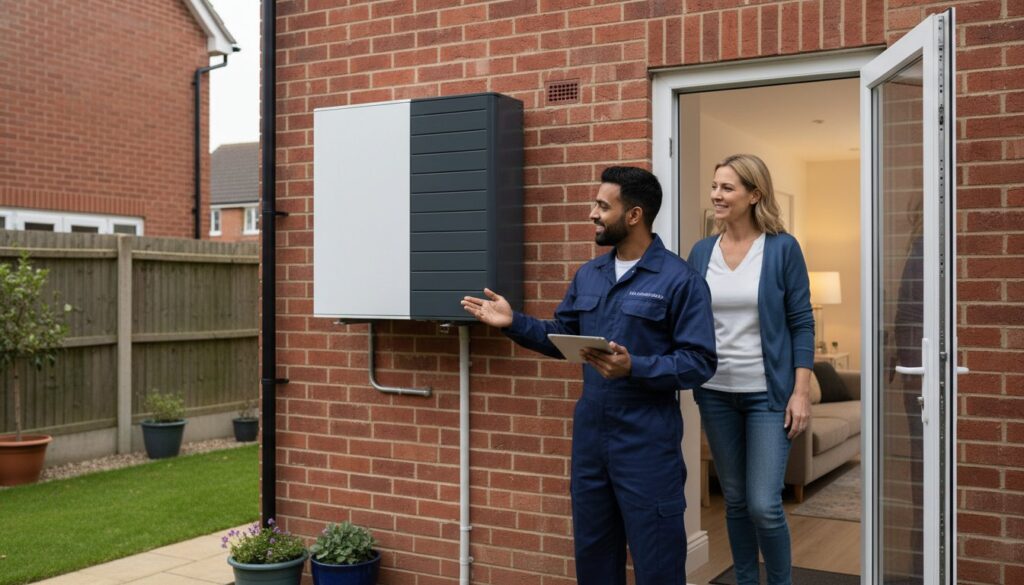
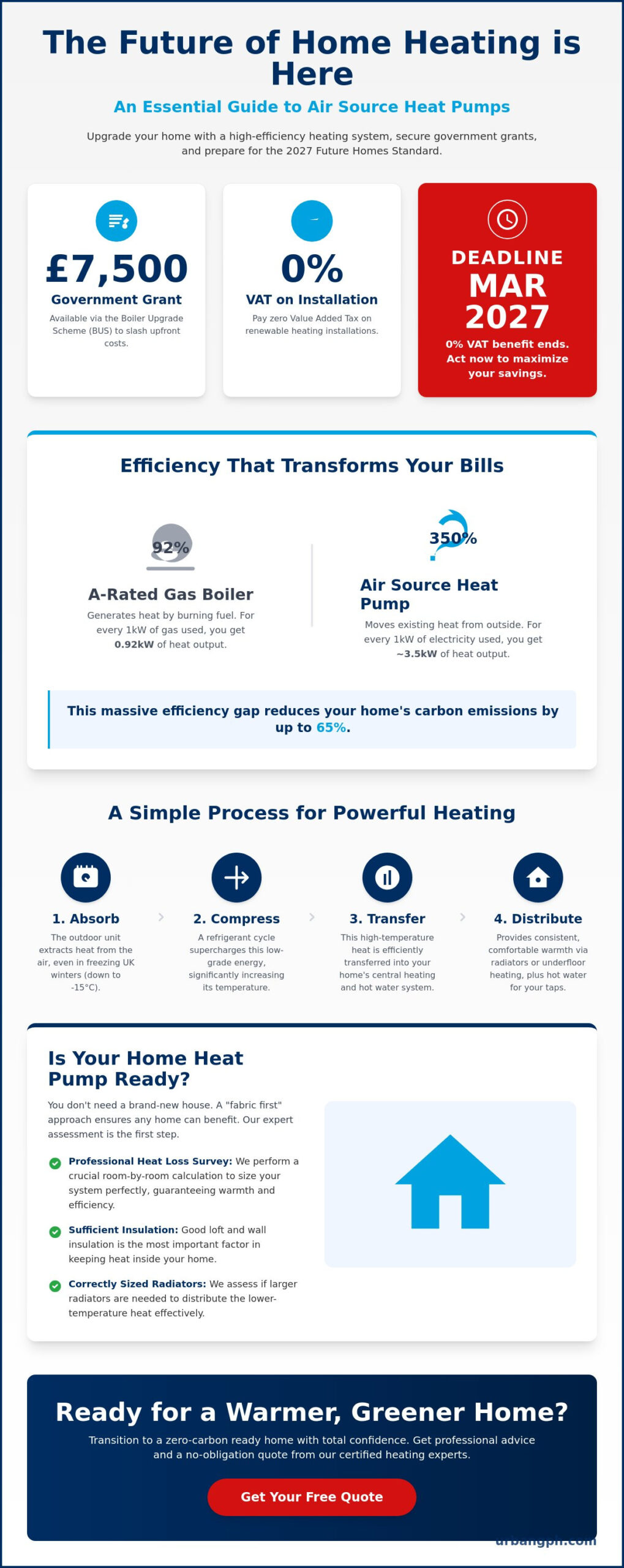
Air source heating is a renewable technology that extracts thermal energy from the outside air to provide warmth for your home. It’s a proven solution that functions efficiently even when external temperatures drop as low as -15°C. To explore the foundational physics of these systems, you can learn more about How Air Source Heat Pumps Work via Wikipedia. This process relies on a sophisticated refrigerant cycle that absorbs low-grade heat, compresses it to increase the temperature, and then transfers that energy directly into your heating system.
Think of the system as a fridge working in reverse. While a refrigerator pulls heat from its interior to keep your food cold, a heat pump pulls heat from the environment to keep your living room warm. By 2026, the industry standard for efficiency has reached 300% to 400%. This means for every 1kW of electricity the unit consumes, it delivers 3kW to 4kW of heat. Contrast this with a modern A-rated gas boiler, which typically achieves only 92% efficiency. The outdoor unit itself occupies a small footprint, usually positioned against an external wall where it has access to plenty of airflow.
Air-to-Water vs. Air-to-Air Systems
Most UK domestic installations rely on air-to-water air source heating systems. These are considered the gold standard because they provide both space heating and domestic hot water. They connect to your “wet” central heating, such as radiators or underfloor pipes. Air-to-air systems operate differently by circulating warm or cool air through fans. While these are excellent for summer cooling or supplementary heating in a single room, they don’t heat your taps or showers. For a full boiler replacement, air-to-water is the reliable choice for year-round comfort.
Essential Components: Beyond the Outdoor Unit
The outdoor unit is only one part of a high-performance system. Inside your home, the pump integrates with your existing emitters. Because heat pumps run at lower flow temperatures than gas boilers, we may recommend upgrading specific radiators to ensure your rooms stay cozy. A critical part of this setup is the hot water cylinder. This specialised tank stores the thermal energy your pump generates, providing a steady supply of hot water for your family. We also install smart control systems that monitor the weather. These controls adjust the system’s output automatically, ensuring you never waste a penny on your energy bills.
Efficiency and Performance: Why Heat Pumps Outperform Traditional Boilers
Boilers generate heat by burning fuel. Heat pumps are different because they move existing heat from one place to another. This fundamental shift in technology is why an A-rated gas boiler hits a maximum efficiency of 92%, while air source heating regularly achieves 350% or higher. You essentially receive over three units of heat for every single unit of electricity consumed. This massive efficiency gap is the reason why 88% of the UK public now recognises that we must change how we heat our homes to reach Net Zero targets.
Modern units are built for the UK climate. They don’t rely on the “scorching” bursts of heat common with old-fashioned boilers. Instead, they provide a consistent, lower-temperature warmth that keeps your home at a steady, comfortable level all day. You won’t have to worry about cold snaps either. These systems maintain reliable performance even when temperatures hit -15°C. By making the switch, you can reduce your home’s carbon emissions by up to 65% compared to a traditional gas system. If you want to see how this fits your budget, you can check our flexible finance options for a professional installation.
Is Your Home Ready for Air Source Heating?
You don’t need a brand-new house to enjoy the benefits of renewable energy. While a “fabric first” approach is ideal, many older properties in Portsmouth and Southampton are already suitable. The priority is insulation. If your loft and walls are well-insulated, the heat stays inside where you need it. You might need to upgrade your radiators to models with a larger surface area. Since the system runs at a lower flow temperature, larger radiators help distribute the heat more effectively without working the pump too hard. Our engineers can perform a full assessment to debunk the myth that older homes are too “leaky” for heat pumps.
Seasonal Performance Factor (SPF) Explained
Don’t get distracted by the Coefficient of Performance (COP) alone. COP is just a snapshot of efficiency at a specific moment. What matters for your bank account is the Seasonal Performance Factor (SPF). This figure tracks the system’s efficiency across the entire year, including the coldest months. A high SPF depends on expert system design and a low flow temperature. If your flow temperature is set too high, the system works harder and your electricity bill increases. For impartial data on how these metrics impact your savings, the Energy Saving Trust guide offers a deep dive into real-world performance. We focus on precision calibration to ensure your SPF stays as high as possible, protecting your long-term investment.
Calculating the Costs: Grants, Savings, and Finance Options
Investing in air source heating represents a significant financial commitment, but the landscape in 2026 is more supportive than ever. A typical installation currently ranges from £7,000 to £13,000 before any government intervention. However, the 0% VAT rate on heat pump installations remains in effect until March 2027, providing immediate relief on the total invoice. When you factor in the high efficiency discussed earlier, the transition becomes a strategic move to eliminate gas standing charges and protect your home from volatile fossil fuel markets. For a broader perspective on the technology’s global standards, the Department of Energy guide to air-source heat pumps highlights how these systems are becoming the international benchmark for residential efficiency.
Long-term savings depend on your previous fuel source and your home’s insulation. While electricity costs are currently capped at 24.67p/kWh compared to gas at 5.74p/kWh, the efficiency of the pump means you use far fewer units of energy to achieve the same comfort level. By removing the gas connection entirely, you also stop paying the daily standing charge, which adds up to significant annual savings. We focus on ensuring your system is sized perfectly to maximize this return on investment.
Government Grants and Eligibility Criteria
The Boiler Upgrade Scheme (BUS) is the primary driver for adoption in England and Wales. It offers a substantial £7,500 grant that stays active until March 2028. To qualify, your property must have a valid Energy Performance Certificate (EPC) with no outstanding recommendations for loft or cavity wall insulation. We handle the entire application process for you. Our team submits the paperwork and the grant is deducted directly from your quote, so you only pay the remaining balance. Scottish homeowners can access similar support through Home Energy Scotland, offering £7,500 or up to £9,000 for those in rural areas.
Accessible Financing for Home Heating
We know that even with a £7,500 grant, the remaining balance can be a hurdle. This is where retail finance changes the game. Instead of depleting your savings, you can spread the cost through manageable monthly installments. Our credit application process is fast and transparent. We provide a clear breakdown of interest rates and payment terms before you commit. This approach ensures that air source heating isn’t just for those with large cash reserves. It’s a viable option for any household looking to upgrade their infrastructure. By choosing a finance plan, you can start saving on carbon emissions and energy bills immediately while paying for the system at a pace that suits your budget.
The Installation Process and Ongoing System Maintenance
A successful air source heating installation begins long before our engineers arrive at your property. We perform a meticulous room-by-room heat loss calculation to determine exactly how much energy each space requires to stay warm. This isn’t a “rule of thumb” estimate based on house type. We measure window sizes, wall materials, and insulation levels to ensure your new system is sized perfectly. Getting this right is essential for meeting the government’s target of 600,000 installations per year by 2028. An oversized unit wastes energy by “cycling” on and off, while an undersized unit won’t keep you warm during a January cold snap.
On the day of installation, our team prioritizes speed and punctuality. We site the outdoor unit in a location that maximizes airflow. We stay compliant with local noise regulations. You can expect upgrades to your internal pipework too. Because heat pumps operate at lower flow temperatures than gas boilers, they require a higher volume of water to move the same amount of heat. This often means replacing 15mm copper pipes with 22mm or 28mm alternatives. Once the hardware is in place, we commission the system by setting your specific “heat curve.” This allows the pump to adjust its output automatically based on the outside temperature, ensuring maximum efficiency. Finally, we provide a full handover. We’ll show you how to manage your smart thermostats so you can stop thinking about “burst” heating and start enjoying a steady, comfortable climate.
Why Professional ASHP Servicing Matters
Annual maintenance is a mandatory requirement to protect your manufacturer’s warranty and maintain peak efficiency. During a service, our expert engineers clean the outdoor evaporator fins, check refrigerant levels, and test all electrical connections. Unlike a gas boiler service, which focuses on combustion safety, a heat pump service ensures the fluid dynamics and sensors are perfectly calibrated. Neglecting this can lead to a 15% drop in efficiency, which directly increases your electricity bills. It’s a small investment that prevents the stress of an emergency breakdown. Our team provides the reliable, professional support you need to keep your system running smoothly.
Integrating Hot Water Solutions
A high-performance heat pump needs a compatible partner to handle your showers and taps. Most domestic systems require a dedicated unvented cylinder. These cylinders feature a much larger internal heat exchanger coil than standard tanks. This design allows for fast reheat times and provides the high-pressure water flow that modern families expect. We ensure every component meets the highest safety standards, giving you total peace of mind. To get started with a system designed for your home, book a Fast, Reliable engineer today for a professional survey.
Transitioning to Renewable Energy with Urban Gas Plumbing and Heating
Switching to air source heating is a major step toward a zero-carbon ready home. You need a partner who understands the technical demands of the Future Homes Standard regulations, which begin their transitional period on March 24, 2027. We provide end-to-end support for every homeowner. Our process begins with a professional heat loss survey and continues through the £7,500 Boiler Upgrade Scheme application. We handle the paperwork so you can focus on the benefits of a warmer, more efficient home. Our Gas Safe Registered engineers bring years of experience to every project. We don’t just install hardware; we build sustainable heating solutions that last.
Speed and reliability are our core promises. We know that a heating upgrade can feel overwhelming. That’s why we prioritize a “we have this under control” approach. From the moment you contact us, we move quickly to assess your property and provide a transparent quote. Our local roots in Portsmouth, Southampton, and Chichester mean we understand the specific needs of South Coast homes. We are fully insured and certified. You can trust our team to deliver technical excellence without the jargon. We are the steady hand you need when making the leap to renewable energy.
The Urban Gas Advantage
Our “reliable local hero” personality means we value punctuality and safety above all else. We provide a strictly business-focused service that respects your time and your property. We also address the financial barriers to green energy. Our transparent approach to retail finance allows you to spread the cost through manageable monthly installments. We explain the interest rates and credit applications clearly. No hidden fees. No surprises. This commitment to transparency has helped us become a trusted authority in the regional home services sector. We combine professional trade expertise with accessible financial solutions for every budget.
Book Your Professional Heating Survey
Take the first step toward a greener home today. The UK government’s target of 600,000 heat pump installations per year by 2028 is ambitious, and we are ready to help you be part of that change. Don’t wait for the 2027 regulation deadlines to approach. Secure your £7,500 grant and 0% VAT benefit now. Our expert team is standing by for a no-obligation discussion. We provide the fast, reliable service you expect from a local leader. Book a trusted engineer today for your air source heating survey and ensure your home is ready for the future.
Secure Your Home’s Future with Sustainable Heating
You now have the technical and financial facts to make an informed decision for your property. Transitioning to air source heating is a strategic move that combines 350% efficiency with a 65% reduction in carbon emissions. With the £7,500 Boiler Upgrade Scheme grant active until March 2028 and 0% VAT available until March 2027, the incentives to switch are at an all-time high. You don’t have to worry about high upfront costs either. Our retail finance options allow you to spread the investment into manageable monthly installments that suit your household budget.
Our Gas Safe Registered engineers provide expert ASHP installation and servicing across Portsmouth, Southampton, and Chichester. We handle every detail, from the initial room-by-room heat loss calculation to the final commissioning of your system. We are your reliable local heroes, committed to technical excellence and your family’s year-round comfort. Don’t wait for the 2027 Future Homes Standard deadlines to arrive. Take control of your energy bills and your carbon footprint today.
Book a trusted engineer today for your air source heating survey and start your journey toward a warmer, greener, and more efficient home.
Frequently Asked Questions
Are air source heat pumps noisy for neighbours?
Modern units are very quiet and typically operate at 40 to 60 decibels, which is similar to the hum of a domestic refrigerator. We ensure your system is sited professionally to comply with all local noise regulations. By placing the unit on anti-vibration mounts and maintaining a clear distance from property boundaries, we guarantee that the sound won’t disturb you or your neighbours. It’s a discreet solution for any residential area.
How much does an air source heat pump cost to run compared to gas?
Running costs are comparable to modern gas boilers because the system’s high efficiency offsets the higher price of electricity. Based on April 2026 price caps, electricity costs 24.67p/kWh while gas is 5.74p/kWh. However, air source heating delivers over three units of heat for every unit of power used. When you remove the daily gas standing charge, well-insulated homes often see a reduction in total annual energy spend.
Do I need to replace my radiators for air source heating to work?
You don’t always need to replace every radiator, but we often recommend upgrading specific units to larger models. Heat pumps operate at a lower flow temperature than old boilers, so a larger surface area is needed to distribute heat effectively. Our engineers perform a room-by-room heat loss survey to identify exactly which radiators need an upgrade. This ensures your home stays warm without forcing the pump to work too hard.
Can I get a grant for an air source heat pump in 2026?
Yes, you can access a £7,500 grant through the Boiler Upgrade Scheme (BUS) which is confirmed to run until March 2028. This grant is available to homeowners in England and Wales for replacing fossil fuel systems. We handle the entire application process on your behalf and deduct the £7,500 directly from your final invoice. It’s a straightforward way to make renewable energy more affordable for your household.
What happens to air source heating in freezing temperatures?
Your system will continue to provide reliable warmth even when outside temperatures drop as low as -15°C. Modern air source heating units use advanced refrigerants that can extract thermal energy from very cold air. While the efficiency might dip slightly during extreme cold snaps, the system is designed to maintain a consistent indoor climate. You can trust that your home will remain comfortable throughout the UK winter.
How long does it take to install an air source heat pump?
A standard installation typically takes between three and five working days to complete. This timeframe includes siting the outdoor unit, upgrading internal pipework, and installing a new unvented hot water cylinder. We prioritize speed and efficiency to minimize disruption to your daily routine. Our expert team ensures the system is fully commissioned and that you receive a comprehensive handover before we leave your property.
Do I need planning permission for an outdoor heat pump unit?
Most installations fall under “Permitted Development” and don’t require formal planning permission. You must meet specific criteria, such as the unit being at least one metre from the property boundary and having a volume smaller than 0.6 cubic metres. If you live in a conservation area or a listed building, different rules apply. We provide expert guidance on local regulations in Portsmouth and Southampton to ensure your installation is fully compliant.
How often does an air source heat pump need servicing?
You must book a professional service once every year to protect your manufacturer’s warranty and maintain peak efficiency. An annual check ensures that the evaporator fins are clean and the refrigerant levels are correct. Regular maintenance prevents small issues from becoming expensive repairs. Our Gas Safe Registered engineers provide comprehensive ASHP servicing to keep your system running reliably for its 15 to 20-year lifespan.