You wake up in Southampton, step into the shower, and find yourself shivering under a weak trickle because someone else turned on a kitchen tap. It’s a frustrating start to the day that many homeowners accept as normal, but it doesn’t have to be. Deciding between an unvented vs vented hot water cylinder is the single most important choice you’ll make to reclaim your morning routine and your loft space.
We know you want a powerful shower and a reliable system without facing a massive financial shock. You deserve a home where the water pressure remains constant regardless of how many bathrooms are in use. This 2026 comparison guide provides the clarity you need to choose between a traditional gravity-fed setup and a modern pressurized system. We’ll break down the critical performance differences, explain why unvented systems require a G3 certified installer, and look at total costs ranging from £750 for vented replacements to £3,500 for full unvented upgrades. You’ll also discover how our manageable payment options make a high-pressure home a reality today.
Key Takeaways
- Understand the fundamental differences between an unvented vs vented hot water cylinder to identify which system best serves your home’s plumbing layout and daily water usage.
- Discover how modern unvented systems provide high-pressure hot water to every tap, ending the frustration of weak showers when other faucets are in use.
- Learn how you can reclaim valuable loft space by removing traditional header tanks and upgrading to a streamlined, mains-fed heating solution.
- Identify the critical safety requirements for G3 certified installations and why professional expertise is non-negotiable for modern pressurized systems.
- Explore how our manageable monthly installments and retail finance options help you fund a reliable heating upgrade without the stress of high upfront costs.
Vented vs Unvented Hot Water Cylinders: Which System Suits Your Home?
Think of your Hot water storage tank as the energy battery of your home. It stores heat until the moment you turn on a tap. Choosing between an unvented vs vented hot water cylinder is a decision that dictates your daily comfort and long-term utility costs. In 2026, this choice is more vital than ever. Updated energy efficiency standards, specifically the ErP Directive, now mandate strict limits on standing heat loss for all new installations. This means your choice isn’t just about pressure; it’s about compliance and your carbon footprint. Both systems remain relevant today. Your property’s age, existing pipework, and local water pressure in areas like Portsmouth or Southampton will determine the right fit for your household.
What is a Vented Hot Water Cylinder?
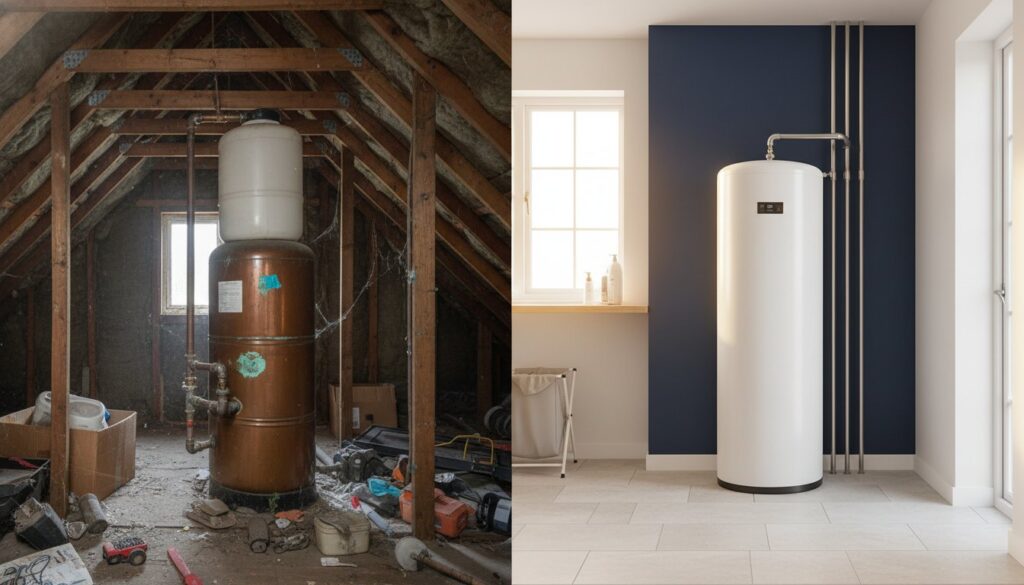
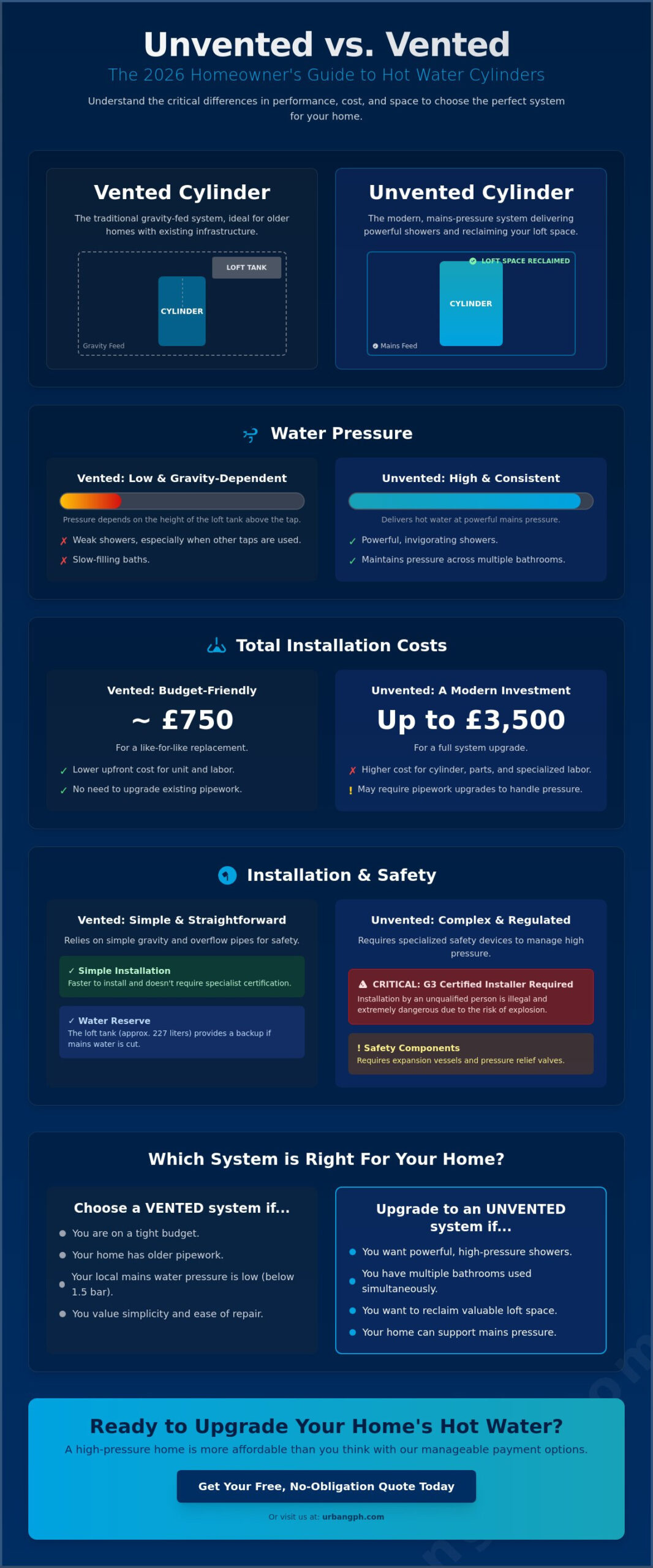
A vented system is the traditional setup found in most older UK homes. It relies on a large cold water storage tank, typically located in the loft. This tank feeds the cylinder below using the simple force of gravity. The system is “vented” to the atmosphere via a pipe that allows for air expansion and safety overflows. Because gravity does the work, the pressure at your taps depends on the vertical distance between the loft tank and the faucet. While these systems are reliable and often cheaper to install as a like-for-like replacement, they are the primary cause of weak shower pressure in upstairs bathrooms. They remain a solid option for homes where the existing pipework cannot handle high-pressure mains water.
What is an Unvented Hot Water Cylinder?
Unvented cylinders are modern, high-performance units that connect directly to your cold water mains. You can say goodbye to the bulky tank in the loft, which frees up valuable square footage for storage or future renovations. Since these units are mains-fed, they deliver hot water at significantly higher pressure than gravity-fed alternatives. This allows for powerful showers and fast-filling baths throughout the property. Because it’s a sealed system, it requires specialized safety components like expansion vessels and pressure relief valves. These systems must be installed by G3 certified engineers to ensure they safely manage the high internal pressures. It’s the preferred choice for modern families who need consistent performance across multiple bathrooms simultaneously.
Ultimately, your decision rests on your existing infrastructure. If you have a large family and multiple bathrooms, the high-pressure performance of an unvented system is hard to beat. If you’re on a tighter budget and have a smaller property with older pipes, a vented system might be the most practical solution. We can help you assess your local water pressure and find a reliable, long-term solution that fits your budget through our flexible payment options.
The Pros and Cons of Traditional Vented Systems
Vented systems have survived in UK homes for decades for a reason. They are simple. They are dependable. While the modern debate of unvented vs vented hot water cylinder often favors newer technology, the vented tank remains a staple for budget-conscious homeowners. The biggest advantage is the reliability of gravity. If there is a water main burst in your street, you still have a cold water storage tank, usually holding about 227 liters, ready for use. You won’t be left without water for basic needs while the utility company fixes the leak.
These units are significantly cheaper to purchase than their unvented counterparts. During a standard boiler repair or replacement, keeping your vented cylinder can save thousands on labor and material costs. You don’t need to upgrade your entire pipework network to handle high pressure. This makes it an attractive, no-nonsense option for those looking for a functional, low-cost solution that works with existing infrastructure.
Why Homeowners Choose Vented Cylinders
Installation is straightforward and fast. These systems don’t require the complex safety valves or the G3 certifications needed for pressurized units. If you live in an area where mains pressure is consistently below 1.5 bar, a vented system is often your only viable choice. The internal components are basic. This means that if a leak occurs on a Sunday night, a local engineer can usually fix it quickly without waiting for specialized parts. It is a predictable system that provides peace of mind for those who value simplicity over high-tech features.
The Significant Drawbacks to Consider
The main issue is the “shower struggle.” Because the system relies on gravity, the pressure in upstairs bathrooms is often poor, usually falling between 0.5 and 1.0 bar. You might find yourself forced to install a noisy booster pump just to get a decent flow. There is also the maintenance of the loft tank. In freezing winters, uninsulated pipes in the loft can burst. This leads to catastrophic ceiling damage and urgent emergency calls. For a deeper dive into these risks, read The Ultimate Guide to Hot Water Cylinders: Choosing the Best System for Your UK Home in 2026.
Relying on a tank also means the water isn’t as fresh as a mains-fed system. Dust or debris can sometimes enter an open tank if the lid isn’t perfectly sealed. If you are tired of weak showers and want a more modern solution, we can help you evaluate your options. You can book a professional survey with our team to check your current pipework’s compatibility and pressure levels.
The Rise of Unvented Cylinders: High-Pressure Performance
Modern households in 2026 demand more from their plumbing than ever before. If you have multiple bathrooms or a high-end power shower, the traditional gravity-fed system often fails to keep up. This is where the unvented cylinder takes control. By connecting directly to your cold water mains, these units deliver hot water at the same pressure as your kitchen tap. In the ongoing debate of unvented vs vented hot water cylinder, the performance gap is clear. While a vented system might struggle to reach 1.0 bar of pressure, an unvented unit consistently provides between 2.0 and 4.0 bar. This ensures a powerful, invigorating shower experience every single time.
The ability to handle simultaneous demand is the real game-changer for families. You can run two showers at once in your Portsmouth or Southampton home without the temperature or pressure dropping. It’s the current industry standard for any modern bathroom installation or high-occupancy property. Beyond performance, you reclaim your home. Removing the bulky 227-liter cold water tank from your loft frees up significant square footage. This space can be converted into an extra bedroom or used for much-needed storage. It also eliminates the risk of a tank ever overflowing or freezing in the roof space during a harsh South Coast winter.
Performance and Pressure Benefits
Mains pressure does more than just improve your shower. It eliminates the need for noisy, expensive electric pumps that often fail after a few years of heavy use. Because the system is sealed, it’s also more hygienic. You are no longer storing water in an open-topped tank in the loft where dust or debris can accumulate. The operation is noticeably quieter. You won’t hear the constant hum of a booster pump every time someone turns on a tap. It’s a cleaner, faster, and more efficient way to manage your home’s hot water supply.
Safety and G3 Building Regulations
High pressure requires high standards of safety. This is a critical legal area that many homeowners overlook. Because unvented cylinders are pressurized, they must include specific safety features like expansion vessels and temperature relief valves. In the UK, it’s a legal requirement that only G3-qualified engineers install these units. This certification proves the engineer is trained to handle pressurized systems and can self-certify that the work meets Building Regulations. At Urban Gas & Plumbing Heating, our team is fully insured and G3 certified. We take the stress out of the installation by ensuring every safety mechanism is tested and compliant. When professionally maintained, these modern stainless steel tanks are incredibly safe and provide a reliable, long-term heating solution for your home.
Direct Comparison: Pressure, Installation Costs, and Efficiency
Choosing between an unvented vs vented hot water cylinder requires a look at your property’s long-term future. A traditional vented copper cylinder typically has a lifespan of 15 to 20 years. In contrast, modern unvented cylinders are constructed from high-grade stainless steel. These units often last 25 to 30 years and offer superior resistance to corrosion. While the upfront cost for an unvented system ranges from £900 to £3,500, the extended lifespan and performance benefits often provide better value over time. You must also consider the physical requirements of the installation. Thermal expansion is the process where water increases in volume as it heats, which unvented systems must manage via a separate expansion vessel to prevent internal pressure damage.
Be aware of hidden costs when upgrading older properties in Portsmouth or Chichester. If your home was built before 1970, your existing pipework may not be rated for mains pressure. Switching to a 3 bar unvented system could cause leaks in aged copper or lead pipes. A professional site survey is essential to determine if your infrastructure needs reinforcing. If you want to avoid a plumbing crisis, book a trusted engineer today to test your home’s pressure compatibility before you commit to a new unit.
Which System is More Energy Efficient?
Modern unvented cylinders lead the market in heat retention. Most units feature 50mm to 60mm of injected polyurethane foam insulation. This significantly reduces standing heat loss compared to the thin jackets found on older vented tanks. This efficiency is a core requirement of the 2026 Energy-related Products (ErP) Directive. By retaining heat for longer periods, your boiler or heat pump works less frequently. This results in lower monthly energy bills and a smaller carbon footprint for your household. Most of these systems use “indirect” heating, where a coil inside the tank transfers heat from your primary central heating system for maximum efficiency.
Compatibility with Air Source Heat Pumps
Unvented cylinders are the essential partner for Air Source Heat Pump installations. Heat pumps operate at lower flow temperatures, typically around 50°C to 55°C, compared to the 70°C produced by gas boilers. To compensate for this lower temperature, the cylinder requires a high-recovery coil with a much larger surface area. Standard vented tanks rarely have the coil capacity to transfer this heat effectively. Urban Gas specializes in integrating these technologies to ensure a seamless transition to low-carbon heating. With the Boiler Upgrade Scheme offering grants of £7,500 as of May 2026, pairing a heat pump with a compatible unvented cylinder is the most cost-effective way to future-proof your home.
Upgrading Your System with Urban Gas Plumbing and Heating
Deciding on an unvented vs vented hot water cylinder is a significant step toward modernizing your home. When your current system fails or your water pressure drops, you need a steady hand to take control of the crisis. At Urban Gas & Plumbing Heating, we specialize in rapid, professional upgrades across Portsmouth, Southampton, and Chichester. Our “Fast, Reliable” promise ensures you aren’t left in the cold. We arrive on time, provide a clear technical assessment, and deliver a solution that restores comfort to your household immediately. You can trust our team to handle the entire process with the discipline and efficiency of a seasoned local authority.
We take pride in our local roots and our commitment to technical excellence. Every project we undertake is managed by experts who understand the unique plumbing challenges of South Coast properties. We don’t just swap tanks; we optimize your entire heating network for peak performance. Whether you are dealing with an emergency breakdown or planning a full bathroom renovation, we provide the reassurance that your project is in professional hands from start to finish.
Professional Installation and Safety Compliance
Safety is our absolute priority. Installing a pressurized unvented system is a complex task that requires specialized knowledge to manage thermal expansion. Every engineer on our team is Gas Safe Registered and holds the essential G3 certification required by UK law. This allows us to self-certify that your new cylinder complies with all current Building Regulations, including the 2026 updates to Part G. Our experts are equally proficient with traditional gas boilers and modern Air Source Heat Pumps. We provide a comprehensive end-to-end service, covering everything from initial system design to final safety certification. We are fully insured and strictly compliant with all safety standards, giving you total peace of mind.
Flexible Finance and Monthly Payments
We understand that a new cylinder installation is a major investment. While the total cost for an unvented system can range from £900 to £3,500, we believe high-pressure hot water should be accessible to everyone. Unlike many competitors who demand full payment upfront, we offer manageable financial solutions. You can spread the cost of your installation through flexible retail finance options and monthly installments. Our pricing is completely transparent, meaning you won’t face hidden emergency charges or unexpected fees. We help you manage your budget while securing a reliable, long-term heating solution for your home. Book a trusted engineer today for a hot water system assessment and discover how easy it is to upgrade your home’s performance.
Take Control of Your Home’s Hot Water Performance
Choosing between an unvented vs vented hot water cylinder is a decision that impacts your daily comfort and your property’s value. You now have the facts to decide whether to prioritize the high-pressure performance of a modern stainless steel unit or the simple reliability of a traditional gravity-fed system. Unvented systems provide the consistent flow required for multiple bathrooms, while vented tanks remain a practical solution for homes with specific pressure limitations. Both options now meet the strict 2026 ErP energy efficiency standards to keep your bills manageable.
Our Gas Safe Registered and G3 qualified engineers are standing by to provide the expert guidance you need. We specialize in fast, professional installations across Portsmouth, Southampton, and the surrounding areas. You don’t have to face a heating crisis alone. With our flexible finance options, you can upgrade your system today and pay in affordable monthly installments. We provide the steady hand and technical excellence required for total peace of mind.
Get a fast, reliable quote for your new hot water cylinder installation and start enjoying the high-pressure hot water your home deserves. We look forward to helping you future-proof your heating system.
Frequently Asked Questions
Is it worth changing from a vented to an unvented cylinder?
Yes, it’s a worthwhile investment if you want high-pressure showers and more storage space. An unvented system transforms your home’s performance by delivering mains-pressure water at 2.0 to 4.0 bar. While the upfront cost is higher, you’ll reclaim your loft and eliminate the need for noisy booster pumps. Most modern property renovations in Portsmouth now prioritize this upgrade for better daily comfort.
Do unvented cylinders need an annual service?
Yes, an annual service is a legal and safety requirement for these pressurized units. A G3 certified engineer must check the expansion vessel and the temperature and pressure relief valves to ensure they’re functional. Regular maintenance protects your manufacturer’s warranty and prevents safety hazards. It’s the only way to guarantee your system remains efficient and compliant with UK Building Regulations.
Can my old pipes handle the pressure of an unvented cylinder?
Not always. If your property was built before 1970, your existing copper or lead pipework might be too brittle for 3 bar mains pressure. We always perform a thorough pressure test before starting any installation. If your pipes are aged, they may require partial replacement to prevent leaks. We’ll identify these risks early to ensure your new system is safe and reliable.
How much does it cost to install an unvented hot water cylinder?
Total installation costs for a modern unvented system range from £900 to £3,500 based on 2026 market rates. This figure covers the stainless steel unit, professional labor, and all required safety valves. Factors such as property size and the removal of old loft tanks will influence your final quote. We provide transparent pricing and flexible finance plans to ensure your upgrade stays affordable.
What happens if an unvented cylinder fails?
Safety mechanisms like the temperature and pressure relief valves will discharge water through a visible tundish to alert you of a fault. You should call a G3 qualified engineer immediately if you see water dripping from the external discharge pipe. These systems feature multiple fail-safes designed to prevent over-pressurization. They’re extremely safe when installed and maintained by a professional team.
Do I need a loft tank for an unvented system?
No, you don’t need a loft tank because unvented units connect directly to your cold water mains. This is a major benefit when choosing between an unvented vs vented hot water cylinder. You can reclaim your loft space for storage or a room conversion. It also removes the risk of tank overflows or pipes freezing in the roof during a cold South Coast winter.
Can I use a power shower with a vented cylinder?
Yes, but you’ll almost certainly need to install a separate booster pump to get adequate pressure. Vented systems rely on gravity, which usually provides a weak flow of 1.0 bar or less in upstairs bathrooms. While a pump can improve the experience, it’s often noisy and prone to mechanical failure. An unvented cylinder provides high-pressure water naturally without the need for additional pumps.
Is an unvented cylinder better for a large family home?
Yes, it’s the superior choice for high-occupancy households with multiple bathrooms. It allows several family members to shower at the same time without the water temperature or pressure dropping. For families in 2026, the high flow rates and fast recovery times of a stainless steel unvented unit provide the most reliable solution. It ensures everyone in the house has access to consistent hot water.