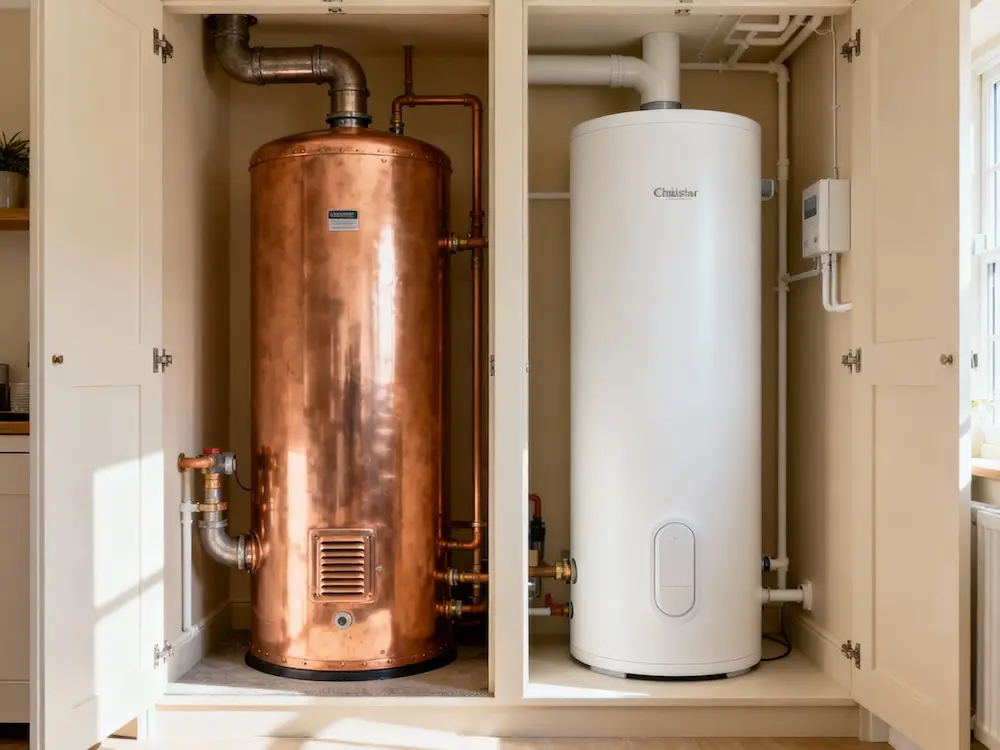
Most people in Chichester only think about their hot water cylinder when the shower goes weak or the bath takes ages to fill. But whether you choose a vented or unvented cylinder can make a big difference to your water pressure, comfort, running costs and how future‑proof your home is. If you’re upgrading an old system, planning an extension or adding extra bathrooms, it’s worth weighing up both options before you spend a penny.
This guide explains how vented and unvented cylinders work, the key pros and cons for real Chichester homes, and how to decide which setup fits your property, budget and long-term plans.
What Is a Vented Hot Water Cylinder?
A vented cylinder is the traditional setup found in many older houses:
- It uses a hot water cylinder, usually in an airing cupboard.
- The cylinder is fed by a cold water storage tank in the loft.
- Hot water is delivered to taps and showers by gravity.
Because the system is gravity-fed, your hot water pressure depends on the height difference between the loft tank and your outlets. This is why upstairs showers can feel weak and why loft conversions sometimes struggle with good flow rates.
Pros of Vented Cylinders
- Usually cheaper to buy and install.
- Simple, proven technology with fewer specialist parts.
- Easier to maintain and repair in many older properties.
- You can still have hot water via immersion if the boiler fails.
Cons of Vented Cylinders
- Lower hot water pressure, especially on upper floors.
- Requires a cold tank in the loft, taking up space and adding weight.
- Tanks can be vulnerable to freezing or contamination if not properly maintained.
- Not always ideal for modern high‑pressure showers or multiple bathrooms.
For some smaller or older Chichester homes, a vented system is still perfectly adequate especially if you’re not planning major renovations. But many homeowners now want better pressure and less reliance on loft tanks.
What Is an Unvented Hot Water Cylinder?
An unvented cylinder is a sealed, high‑pressure system:
- Fed directly from the mains cold water supply.
- No cold water tank is needed in the loft.
- Hot water pressure is broadly similar to your mains pressure.
Unvented cylinders can usually be sited more flexibly (e.g. in a cupboard, garage or utility), freeing up loft space and delivering powerful showers and fast‑filling baths. Because they operate at higher pressures, they must be installed and serviced by a qualified, G3‑certified engineer.
Pros of Unvented Cylinders
- Strong, consistent hot water flow at taps and showers.
- Ideal for homes with multiple bathrooms or high demand.
- No cold water storage tank—more space and less maintenance.
- Sealed system reduces risk of contamination.
- Works well with modern boilers, underfloor heating and renewables.
Cons of Unvented Cylinders
- Higher initial installation cost.
- Must be installed and maintained by a qualified engineer.
- Requires appropriate mains water pressure; if your mains is weak, you may need upgrades or pumps.
For many modernised Chichester homes and extensions, unvented cylinders are now the preferred choice, especially where powerful showers and simultaneous hot water use are important.
Key Considerations for Chichester Properties
1. Water Pressure and Supply
Before upgrading, it’s important to test your mains pressure and flow. Parts of Chichester with older mains or long supply runs may have borderline pressure for a fully unvented system without additional work. Urbangph can measure this on site and advise whether:
- Your existing mains is sufficient for an unvented cylinder.
- You’d benefit from improvements or boosting.
- A well‑designed vented or hybrid solution is more practical.
2. Number of Bathrooms and Hot Water Demand
- 1 bathroom, modest usage:
A vented system or well‑sized combi boiler can often cope. - 2+ bathrooms or high simultaneous use:
Unvented cylinders usually provide the best experience—strong showers and fewer complaints when more than one tap is running.
3. Space and Layout
If you want to clear your loft for storage or a future conversion, losing the cold tank with an unvented setup is a big advantage. Cylinders can be placed in cupboards, garages, or plant rooms, freeing valuable roof space. For compact properties, Urbangph can discuss whether combining a boiler change with a cylinder swap makes sense.
4. Property Age and Future Plans
Older Chichester properties with original pipework sometimes need extra work before switching to an unvented system. In some cases, the best approach is:
- Stage 1: Update key pipework, valves, and controls.
- Stage 2: Upgrade boiler and cylinder to a modern, high‑efficiency setup.
If you’re planning a new kitchen, loft conversion, or extension, it’s worth designing your hot water system around your future layout, not just today’s.
Cost and Maintenance Comparison
Vented systems:
- Lower upfront costs.
- Fewer specialist components.
- Maintenance mainly around tank condition, valves, and immersion heaters.
Unvented systems:
- Higher initial outlay.
- Require annual safety and function checks by a qualified engineer.
- Offer better long‑term convenience and typically higher property appeal.
When Urbangph quotes for vented & unvented cylinder services, you’ll see both short‑term and long‑term cost implications clearly laid out, so you can choose based on more than just the cheapest installation.
How Your Boiler Choice Fits In
Your cylinder does not work in isolation—its performance is closely linked to your boiler type and condition. For example:
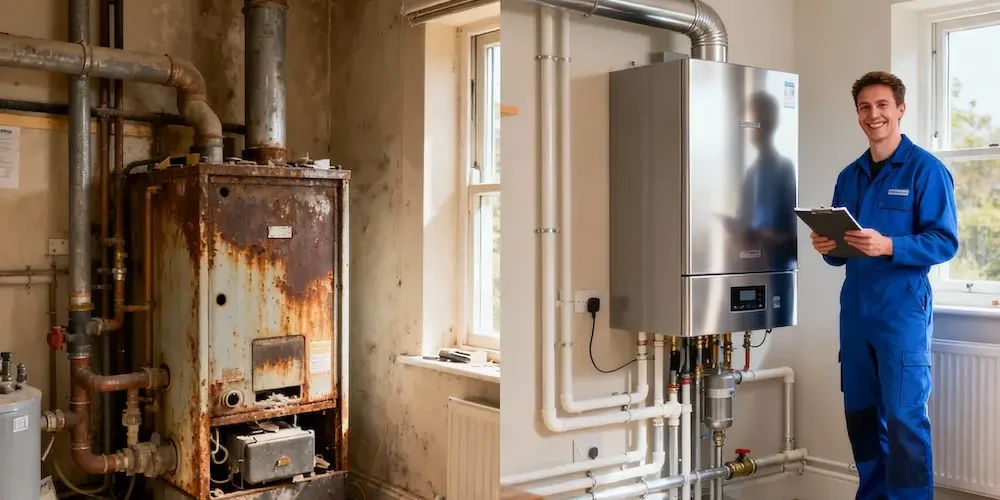
- An old, inefficient boiler feeding a new unvented cylinder may still waste fuel.
- A modern condensing boiler paired with a correctly sized unvented cylinder can deliver excellent performance and efficiency.
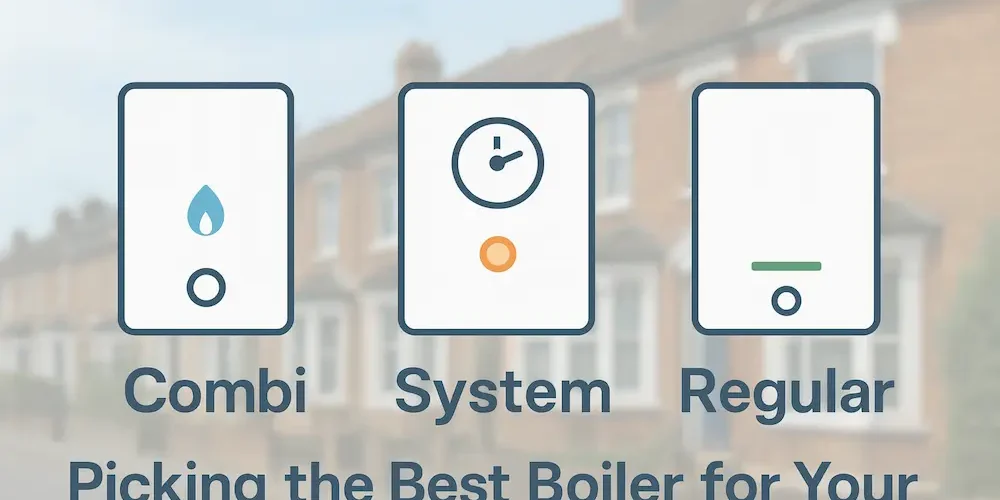
- In some smaller Chichester homes, moving to a combi boiler might make more sense than retaining a cylinder at all.
If you’re considering a cylinder upgrade, it’s a good time to review whether your current boiler is still the right choice. Urbangph can provide advice on both your hot water storage and boiler installation & replacement options as part of the same survey.
Which Should You Choose for Your Chichester Home?
In simple terms:
- Choose a vented cylinder if:
- You have a smaller home with modest hot water demand.
- Budget is tight and pressure performance is acceptable.
- You want a straightforward replacement without major system changes.
- You have a smaller home with modest hot water demand.
- Choose an unvented cylinder if:
- You want powerful showers and strong hot water flow.
- You have multiple bathrooms or a growing family.
- You’re modernising, extending, or removing your loft tank.
- You want a system that feels more “future-proof” and adds property appeal.
- You want powerful showers and strong hot water flow.
Talk to Urbangph About Hot Water in Chichester
The right solution depends on more than just a quick online comparison. Your mains pressure, pipework, boiler, and future plans all matter. Urbangph’s experienced engineers can visit your Chichester property, assess your current system, and give honest, clear advice on whether a vented or unvented cylinder or a broader upgrade will give you the best results.