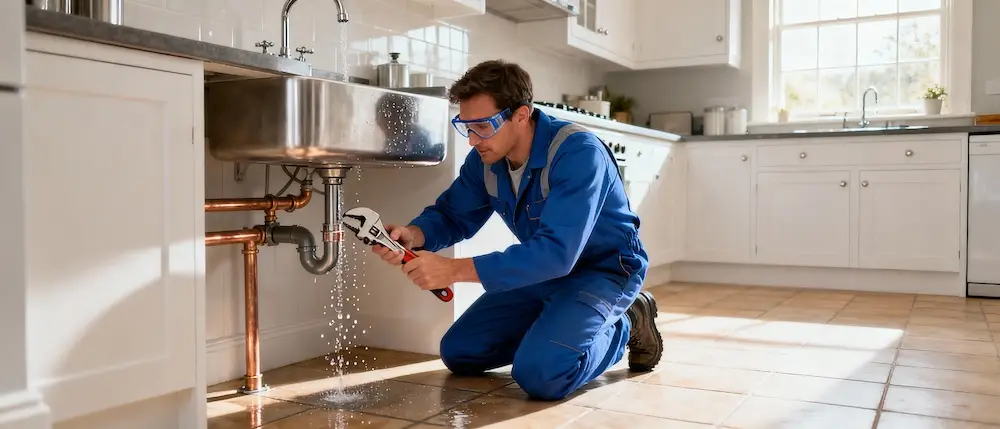
Plumbing problems are part and parcel of living in Portsmouth, especially with older pipework, coastal weather and lots of homes that have been extended over the years. A small drip or slow drain might not look serious at first, but left alone it can quickly turn into damage, stress and a big repair bill.
This guide runs through ten of the most common plumbing issues found in Portsmouth homes, what usually causes them, and how to tell whether it’s safe to watch and try a basic fix or time to call in a qualified Urbangph engineer.
1. Dripping or Leaking Taps
A slow drip might not feel like an emergency, but over weeks and months it wastes water, increases bills, and can stain sinks or baths. Common causes include worn washers, cartridges, or damaged valve seats.
- DIY or call a plumber?
If you’re confident turning off your water and have the right tools, replacing a washer or cartridge is sometimes manageable. But if the tap body is corroded, seized, or part of an older system, it’s usually quicker and safer to bring in a professional from Urbangph’s plumbing services team to repair or replace it properly.
2. Running Toilets
A toilet that keeps running after you flush can waste an enormous amount of water. It’s typically caused by a faulty fill valve, worn flapper, misadjusted float, or debris inside the cistern.
- When to call for help:
If basic checks (like jiggling the handle or gently lifting the float) don’t stop the flow, you likely need new internal parts or a professional adjustment. Ignoring the problem will cost more in water charges than a prompt repair.
3. Slow or Blocked Drains
Kitchen sinks, bath wastes, and shower trays in Portsmouth homes often clog up with food fats, coffee grounds, hair, soap scum, or limescale. Over time, this reduces flow and can cause bad smells.
- DIY vs professional unblocking:
A plunger or drain snake can sometimes clear local blockages. Avoid harsh chemical drain cleaners, they can damage older pipes. If drains keep backing up or multiple fixtures are affected, you may have a deeper blockage or partial collapse that needs a professional inspection.
4. Low Water Pressure
Low water pressure at taps or showers is a regular complaint, especially in older terraced properties or loft conversions. The cause might be local supply issues, clogged aerators, limescale build-up, partially closed valves, or aging pipework.
- When to worry:
If pressure suddenly drops, especially only on hot water, it may signal a serious issue like a failing boiler, cylinder problem, or hidden leak. Consistently poor pressure may need a system assessment, upgrades, or pump installation.
5. No Hot Water or Inconsistent Temperatures
Few things are more frustrating than jumpy or disappearing hot water. Common causes include:
- Boiler faults or error codes
- Failing immersion heaters in cylinders
- Airlocks in pipework
- Faulty thermostats or motorised valves
If your hot water is intermittently hot and cold, or fails altogether, it’s time for a proper diagnosis.
- Who to call:
Because hot water issues often involve your boiler or cylinder safety controls, this is usually not a DIY job. An Urbangph engineer can check whether the issue sits with your boiler, hot water cylinder, or controls, and advise on whether a repair or full boiler servicing & repairs visit is required.
6. Leaking Pipes and Hidden Water Damage
Leaking joints, corroded copper, or damaged plastic pipework can show up as damp patches on walls or ceilings, warped flooring, or a constantly dropping boiler pressure gauge.
- Act quickly:
Water damage escalates fast, causing mould, rotten joists, and ruined decorations. Turn off your stopcock if water is actively escaping and call an emergency-focused plumber at Urbangph. Even small, slow leaks should be investigated as soon as you notice them.
7. Noisy Pipes and Radiators
Banging, whistling, or gurgling noises when you turn on taps or heating can indicate:
- Air in the system
- High water velocity
- Poorly clipped pipes expanding and rubbing
- Sludge in radiators
- Faulty valves or pumps
- When to seek help:
Bleeding radiators can fix simple air issues, but persistent noise might suggest more serious underlying problems in your central heating or plumbing design. An engineer can diagnose whether a central heating system flush & treatment or component replacement is needed.
8. Frequently Blocking Toilets
Repeated blockages often mean more than “someone flushed too much paper once.” In older Portsmouth properties, the problem can lie with:
- Old clay drains with tree root intrusion
- Misaligned or collapsed underground pipe sections
- Hidden objects stuck in the trap or line
- Why professional inspection matters:
Regular plunging is not a long-term solution. A professional can use better tools and, where necessary, arrange a CCTV drain survey to identify damaged sections and recommend permanent repairs.
9. Overflowing Tanks and Cisterns
If you notice water constantly trickling into your toilet bowl or see overflow pipes dripping outside, it’s usually a sign of:
- A sticking ball valve or fill valve
- High tank levels
- Failing float mechanisms
- Don’t ignore overflows:
Aside from water waste, overflowing tanks can cause structural damp and roof space issues if left alone. A quick replacement of faulty valves by a plumber is normally straightforward and far cheaper than repairing damp damage later.
10. Burst Pipes in Cold Weather
Portsmouth’s coastal climate doesn’t see extreme deep-freeze conditions often, but uninsulated pipes in lofts, garages, or external walls can still burst when temperatures drop. Damage can be dramatic.
- Immediate steps:
- Turn off the main stopcock.
- Open taps to relieve pressure.
- Move belongings away from the leak.
- Turn off the main stopcock.
Then contact Urbangph for urgent help to repair or replace the affected sections and check for related issues like damaged valves or fittings.
When Should You Call a Professional Plumber in Portsmouth?
Some basic maintenance like cleaning plugholes, gently clearing trap hair, or bleeding radiators is fine for confident homeowners. But in many cases, calling an expert early prevents:
- Hidden structural damage
- Dangerous DIY mistakes around gas or hot water
- Repeated minor problems that become major failures
As a rule of thumb, call Urbangph if:
- Water is escaping where it shouldn’t.
- You’ve lost hot water or heating.
- You suspect a boiler, cylinder, or gas-related issue.
- Problems keep coming back after temporary fixes.
Our local team can quickly diagnose the cause, explain your options clearly, and carry out long-lasting repairs with minimal disruption to your home.
Need Help with Plumbing Problems in Portsmouth?
If you’re dealing with any of these common plumbing issues or something that just doesn’t feel right, it’s always safer to get a professional opinion. Urbangph’s experienced Portsmouth plumbers handle everything from small leaks to complex system faults, and can also advise when it’s worth planning wider upgrades such as a new boiler installation or bathroom refurbishment.